Wildlife trips on the way of our zoological study in Naliboki Forest

Nowadays, the way of a researcher is overloaded with applying for projects and then producing numerous reports that can negatively affect the studies of wildlife.  Such a situation is spread in the academic zone everywhere in the world. It wasn’t so hard for us a while ago, but during the last decade it started to … Continue reading “Wildlife trips on the way of our zoological study in Naliboki Forest”

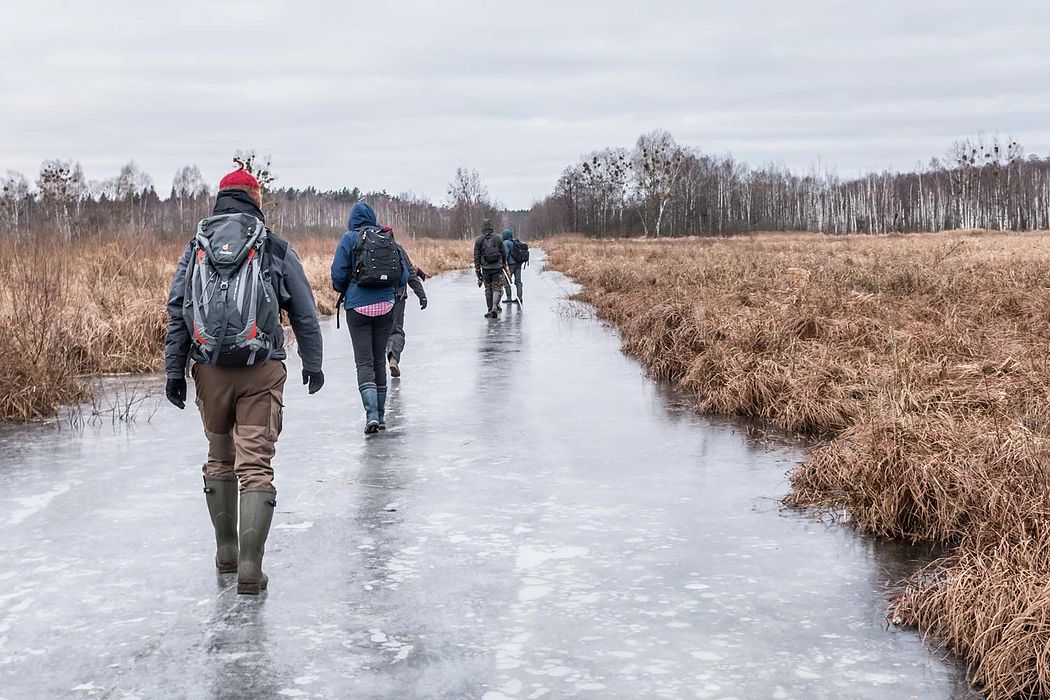
Nowadays, the way of a researcher is overloaded with applying for projects and then producing numerous reports that can negatively affect the studies of wildlife.  Such a situation is spread in the academic zone everywhere in the world. It wasn’t so hard for us a while ago, but during the last decade it started to be really too much, and that brought a feeling of wasting time in the academic zone. In effect, we quitted the zoological institute and university we worked for (in my case for 32 years), moved to our homestead in Naliboki Forest and continued the study on vertebrate predators (first of all, the wolf, lynx and badger) on our own. Continue reading “Wildlife trips on the way of our zoological study in Naliboki Forest”

Enigmatic warm-season behavior and ecology in Eurasian lynxes: pressing questions, hypotheses and results up-to-date

The behavior and ecology of the Eurasian lynx during the snowless season, particularly from the second half of April till the end of October (hereafter the warm season), is still searchless, and several important questions of study on the species in this seasonal period are seemingly even unknown. The main hassle is that the prevailing research method of GSM GPS telemetry  fails to investigate those questions. Basically this method only records coordinates and how active or passive the individual is. It looks like currently the single possible way to learn about the behavior and ecology during the warm season  goes through much routine habitat inspection, art skills to read activity signs of lynxes in snowless period and smart extensive camera-trapping.

Continue reading “Enigmatic warm-season behavior and ecology in Eurasian lynxes: pressing questions, hypotheses and results up-to-date”

The variety of life styles of Eurasian lynxes in Belarus

In Eurasian lynxes there are several age-sex categories, which are strikingly or markedly differed by their life styles.  The data that leads us (Naust Eco Station & Wild Naliboki) to this conclusion originated from about 2300 km of snowtracking lynxes, multiannual study of lynxes with camera-traps (up to 70) and much other various research results. Among them the results of two lynx telemetry projects.

Continue reading “The variety of life styles of Eurasian lynxes in Belarus”

Climbing trees by Eurasian lynxes to emit territorial and mating calls in Belarus: pressing questions and knowledge up-to-date

Another important role of trees in the life of lynxes is usage of elevated positions in tall trees to emit territorial and mating calls. During the winter of 2017-2018 in Naliboki Forest, the central-western part of Belarus we have found that lynxes climbed rather high Scotch pine trees (Sidorovich et al., 2018). In total, during February and March 2018, we registered four such trees, on which adult male lynxes climbed for about 17-26 meters high. The density of the local lynx population was very high about 4-5 inds per 100 square km i.e. about 80 lynxes per almost 2000 square km. We have evaluated that phenomenon of calling by lynxes from a tall tree top as a mating call, also taking into account that it was registered in the lynx mating season (mid-February-early April).

Then in Naliboki Forest in July 2018 we faced with several fresh climbing a tall pine presumably by adult female lynx (that was mother with two kittens), because the tree was in the core area, where this mother lynx with two kittens were staying most of the time.

Continue reading “Climbing trees by Eurasian lynxes to emit territorial and mating calls in Belarus: pressing questions and knowledge up-to-date”

Social contacts in Eurasian lynxes exclusive of between-mate relationships and mother-kittens behaviour

This post addresses the question of poorly known  social contacts in the Eurasian lynxes exclusive of between-mate relationships and mother-kittens behaviour. In the book “Unknown Eurasian lynx Lynx lynx: New findings on the species ecology and behaviour” by Vadim Sidorovich, Jan Gouwy and Irina Rotenko (2019) we have stated  that the species is not a solitary, but it is surprisingly social carnivore.

Continue reading “Social contacts in Eurasian lynxes exclusive of between-mate relationships and mother-kittens behaviour”

Peculiarity of usage of openings by lynxes

This post adverts the recent shift in the habitat-related lynx distribution for usage of openings and the lynx reaction to get back to forest in connection with the considerable changes in the wolf number in Naliboki Forest.
Continue reading “Peculiarity of usage of openings by lynxes”

Enigma of lynx pee

During quite a lot of studies on the Eurasian lynx in Naliboki Forest and Paazierre Forest we realized that this species is still so poorly known (Sidorovich et al., 2019). Even a simple lynx pee hides several non-studied questions that were raised during investigation the species behavior. Several curious pee-related phenomena were registered that was already some achievement, but for every one still there is a pressing question how such a pee regime is possible on a morph-physiological level i.e. by means of which morph-physiological adaptations of the species.  Maybe somebody, after reading the post, will try to investigate the lynx pee questions.
Continue reading “Enigma of lynx pee”

Wolf erasing off marking points of lynxes

In Naliboki Forest adult lynxes particularly males are known as killers of the vulnerable categories of wolves such as pups, lonely living subadults and heavily pregnant females (Sidorovich et al., 2019). Also, lynxes may be a valuable competitor for wolves in their exploiting of the roe deer and beaver populations.  Study on the interference of wolves and lynxes in Naliboki Forest suggested that wolves disagree with  presence of lynxes in the habitats, and they behave aggressively towards lynxes, too.  Lynxes feel safe in forest habitats, whereas they mainly avoid openings, when wolves are common in the habitats and where they may be killed by a wolf pack, because there are no trees to escape. Continue reading “Wolf erasing off marking points of lynxes”

The role and origin of open ground spots for large carnivores, wild ungulates and other wildlife

In snowless period spots with open sand, peat or other ground types are outstanding elements in the habitat structure in  forested areas such as Belarus, and many mammal species tend to use them for territorial marking.  Among these mammal species first of all it may be mentioned red deer, bison, wolf and lynx.

Continue reading “The role and origin of open ground spots for large carnivores, wild ungulates and other wildlife”

Great interest in marking by lynxes from other mammals

Co-author Irina Rotenko

Concerning territorial marking by lynxes there is intriguing question of a great interest of wolves, red foxes and deer to lynx marking points, but there is no such a reaction of lynxes and deer to marking by wolves. It is easy to realize, why red deer, roe deer and red foxes pay so much attention – lynxes kill them often. Therefore, any information about lynx distribution and status (adult or young, sex, welfare etc.) are important for these victim species. The same is for wolves. Adult lynxes not infrequently kill wolves from vulnerable categories such as pups, heavily pregnant females, just small individuals. However why there is no such a pronounced reaction on marking by wolves?

Continue reading “Great interest in marking by lynxes from other mammals”