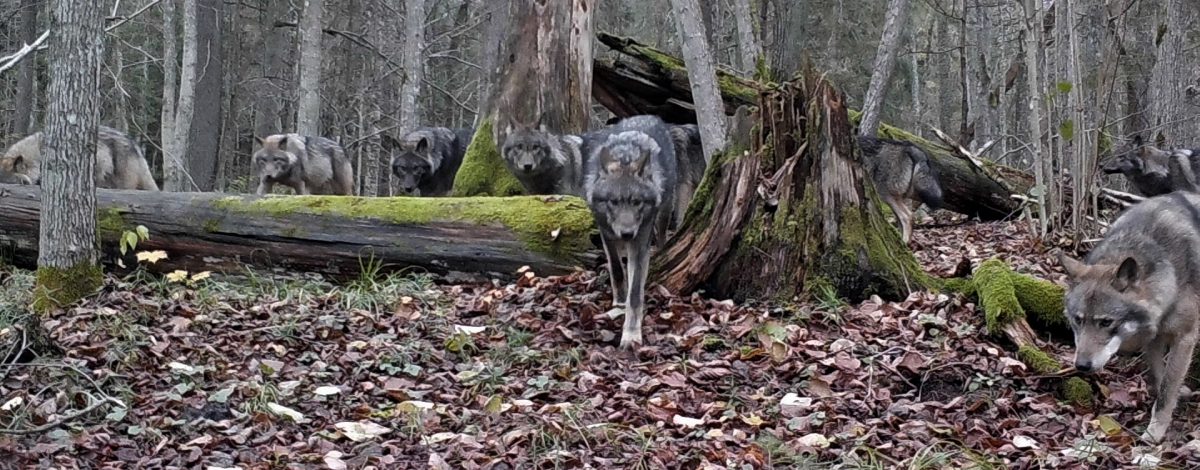

As a former researcher of wild European mink populations, I should have published these findings two decades ago. But better late than never. Back then, my attention was consumed by large carnivores and their conservation challenges, and I regret having neglected other essential topics. That oversight still weighs on me.
Continue reading “One Important Factor Overlooked in the European Mink’s Demise”Category: Former studies
Otters at the Vilija-Minsk water supply canal
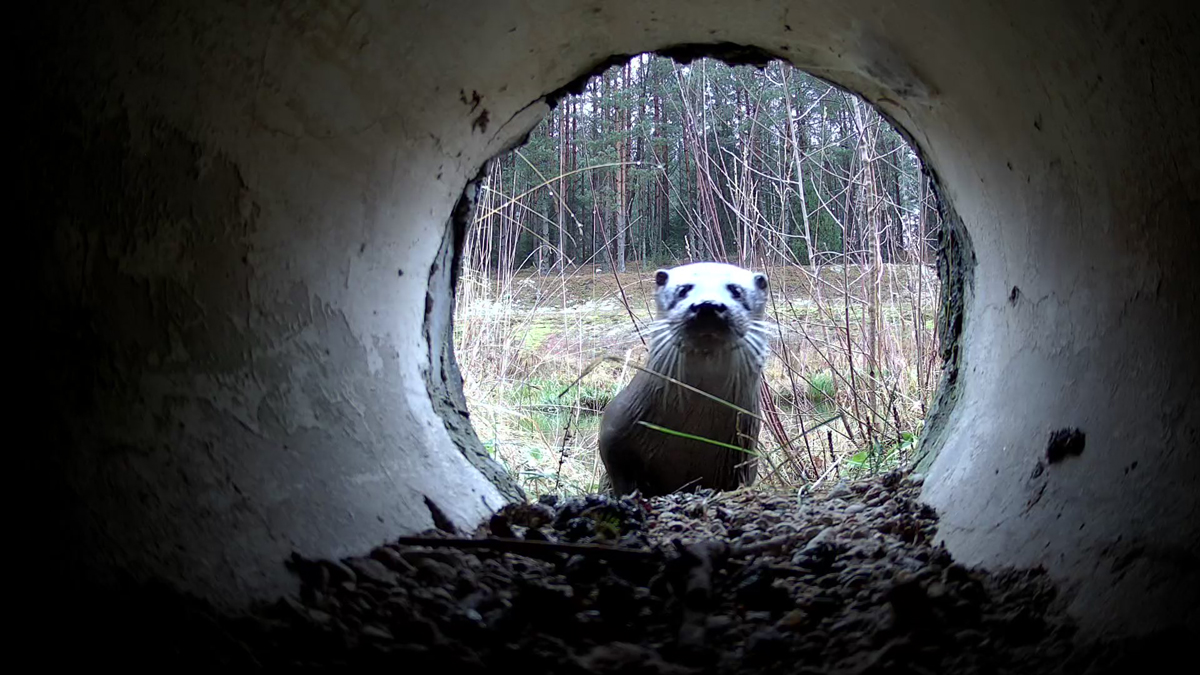
Between 1987 and 1992, I conducted regular studies on otters at the Vilija-Minsk water supply canal. The research primarily focused on assessing the otters’ diet within this artificial habitat and analyzing their distribution along the canal and its surroundings. However, the study was not completed as initially planned. Since last autumn, I have resumed my research on otters in the area, although behavioral aspects were largely unexplored in the past. Now, we are examining otter behavior using camera traps.
Continue reading “Otters at the Vilija-Minsk water supply canal”Zadrach research station: aims, achievements and closure
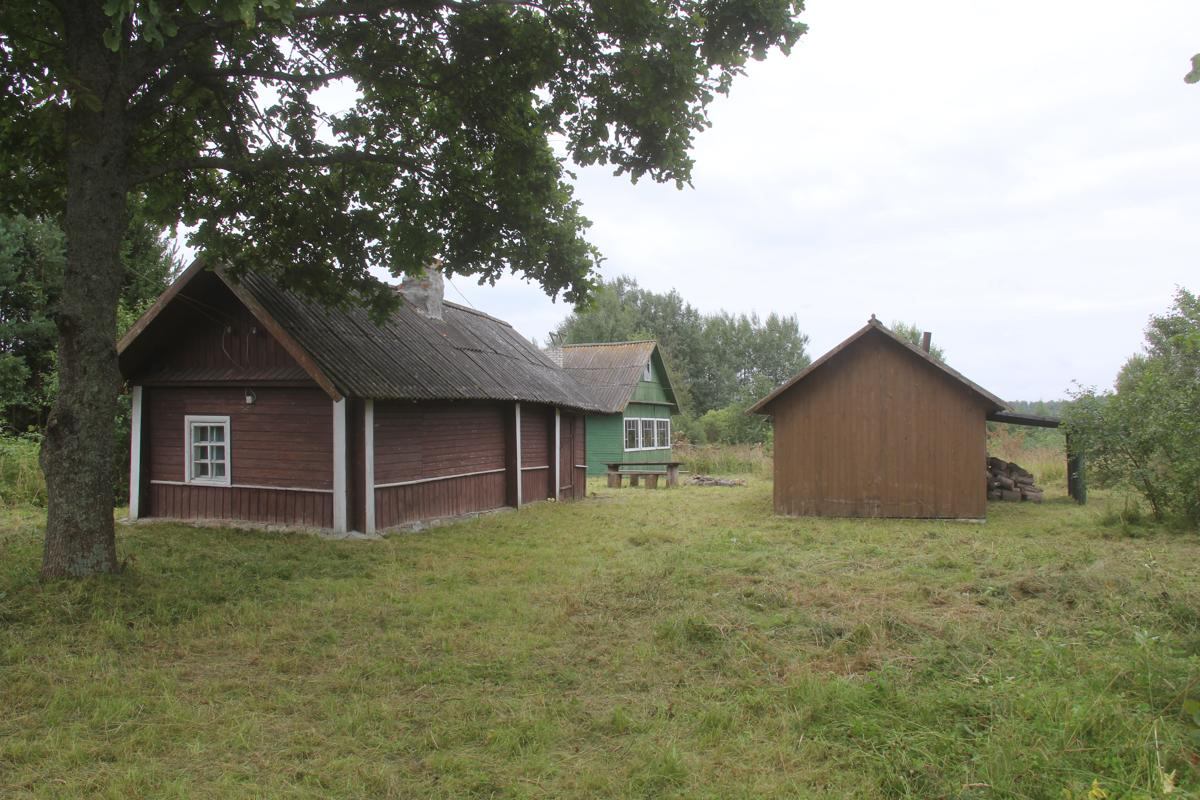
The Zadrach research station was established in 1995 with the purchase of a modest peasant house (the brown one). It is located in the Zadrach hamlet, Haradok district, Vitebsk region, in northeastern Belarus. A second house (the green house) was constructed in 1996, and both were adapted for living quarters and wildlife research. Nestled within the densely forested upper reaches of the Lovat River, the station became a base for ecological studies.
Continue reading “Zadrach research station: aims, achievements and closure”Dying of wild ungulates in the harsh conditions of too deep snow cover and which scavengers consume their carcasses

Co-author Irina Rotenko
In Belarus deep snow cover conditions higher mortality in wild ungulates in particular wild boars and roe deer.
Continue reading “Dying of wild ungulates in the harsh conditions of too deep snow cover and which scavengers consume their carcasses”Declines in mountain hares in Naliboki Forest, central west of Belarus: hypotheses and arguments

Before, in 1950s-1970s the mountain hare was common species in Naliboki Forest. According to the local hunter’s words in those winters the species tracks covered snow cover densely and more or less evenly in each fragment of this forested terrain. In the late 1990s and beginning of 2000s it looked like the mountain hare local population density in Naliboki Forest was evidently in a decline; there were censused only 0.2-0.8 inds per one square km. In 2005-2010 the evident growth of the local population of mountain hare was registered, and more or less high number of the species continued till 2014 (2.9-6.1 inds per one square km). Then during the each next winter we faced with fewer and fewer number of mountain hares in Naliboki Forest.
Continue reading “Declines in mountain hares in Naliboki Forest, central west of Belarus: hypotheses and arguments”Extermination of red foxes and raccoon dogs by lynxes and wolves in forested terrains, and the peculiarities of local populations of these medium-sized carnivores
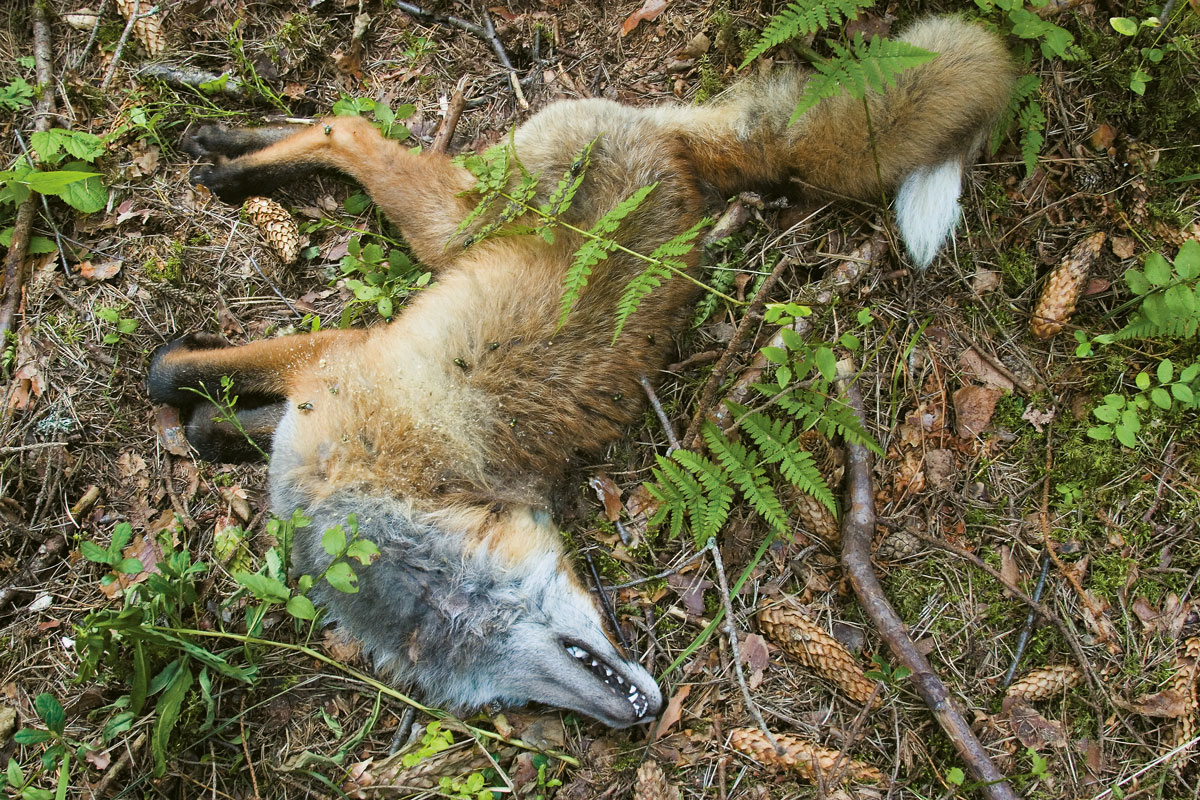
Below we consider the combined impact of lynxes and wolves on the populations of red foxes and raccoon dogs, because their predation effects on the populations of these victim species are hard to separate. First, we list the gained data on the killing rate of red foxes and raccoon dogs by lynxes and wolves from two main different methods i.e. telemetry and snowtracking.
Continue reading “Extermination of red foxes and raccoon dogs by lynxes and wolves in forested terrains, and the peculiarities of local populations of these medium-sized carnivores”Recovering of the badger local population in Naliboki Forest, NW Belarus in connection with winter warming and predation of lynxes and wolves

Historically, the badger was fairly common species in Naliboki Forest that is in the north-western part of Belarus. Besides the respective information that was obtained from the locals (e.g. Baliaslaw Sadowski, Lianard Jurevich, Edzik Khmara), who lived and was familiar with the forest in the 1930s-1960s, also presence of numerous former badger setts suggests about the commonness of badgers. Approximatelly, the density of main setts, where badger families lived before, was not lower than 15 per 100 km2 in the most ecologically rich southern part of Naliboki Forest and about 4 per 100 km2 in the central and central-northern parts of the terrain, where habitat carrying capacity for badgers is markedly lower. It means that the former density in more or less undisturbed badger population in Naliboki Forest ranged approximately between 20 and 120 individuals per 100 km2 in relation to the habitat carrying capacity of the terrain.
Continue reading “Recovering of the badger local population in Naliboki Forest, NW Belarus in connection with winter warming and predation of lynxes and wolves”Outstandingly high species diversity of raptors (diurnal raptors and owls) in Naliboki Forest

While observing and censusing raptors in Naliboki Forest, it was an outstandingly high species diversity of diurnal raptors and owls. Here is a possible explanation of this phenomenon.
Continue reading “Outstandingly high species diversity of raptors (diurnal raptors and owls) in Naliboki Forest”Dramatic situation in the beaver population in Naliboki Forest in relation to hotter and drier summers nowadays
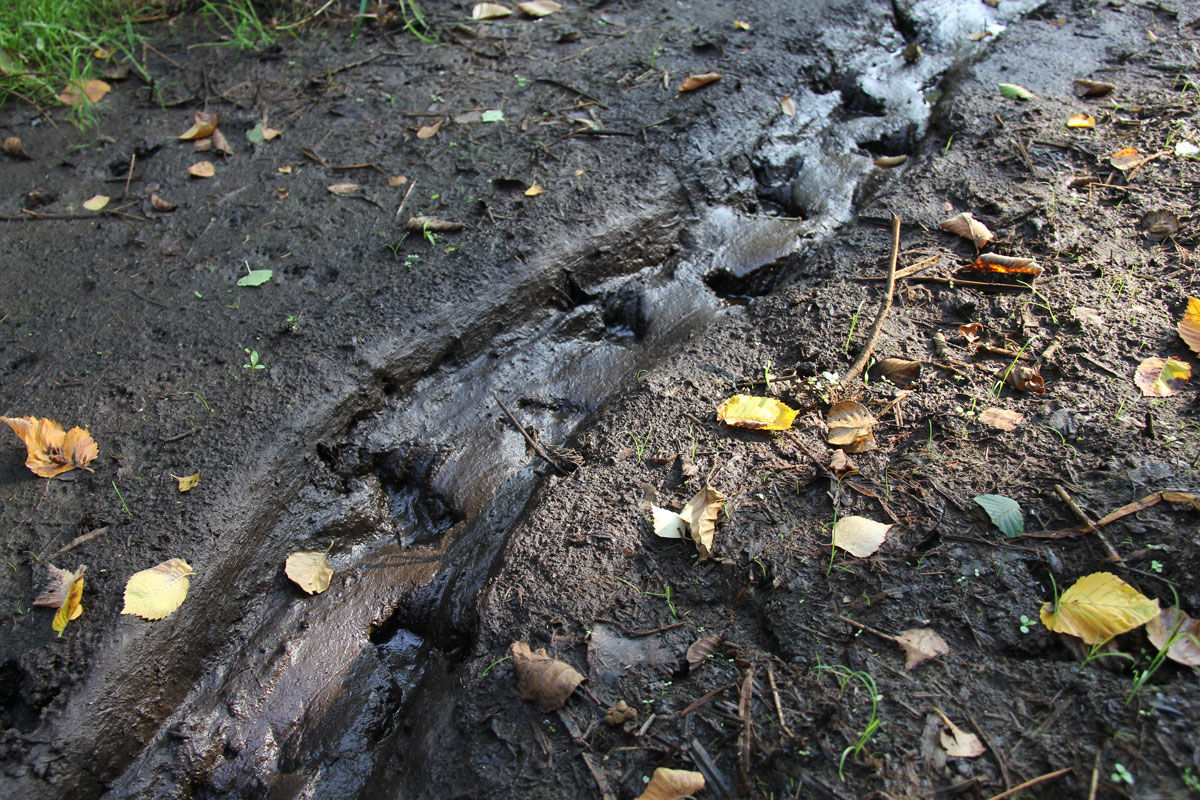
Till the 1960s Naliboki Forest, which is situated in the north-western Belarus, was a greatly swamped terrain, where on the area about two thousands km2 swamps of various types and sizes were interspersed with dry land forests the terrain-wide. Open grassy marshes constituted about 19% of the terrain. Approximately a third part of the forest habitats that covered about 76% of the area were swamped too (Sidorovich, 2016). Such a swamped forest was either in kinds of black alder and downy birch mixture (with prevalence of one of the species) or that was raised bogs with suppressed or normal pines. Continue reading “Dramatic situation in the beaver population in Naliboki Forest in relation to hotter and drier summers nowadays”
Non-howling silent wolves in Belarus

Every time rereading the excellent wolf monograph by Mech and Boitani (2003), in particular, the item about wolf communication by Harrington and Asa, I was surprised to find out how rich voice-communication of wolves in North America and somewhere else can be. In my study areas in Belarus (look like in the whole country) I can characterize wolves as non-howling let’s say silent. More and more I become convinced that wolves in Belarus avoid to produce any loud noise.
 Zoology by Vadim Sidorovich