Co-author Irina Rotenko
Historical Context and Current State of Brown Bears
During the Great Lithuanian period, from the 16th to the 18th centuries, brown bears were abundant in the Naliboki Forest and surrounding forest massifs. Reports of hunting these animals frequently appear in the game husbandry documents of the Radziwills and other magnates. Up until the First World War, the brown bear remained a standard game species and a relatively common trophy in the hunting collections of the local elite, indicating a high-density population in the Naliboki Forest.
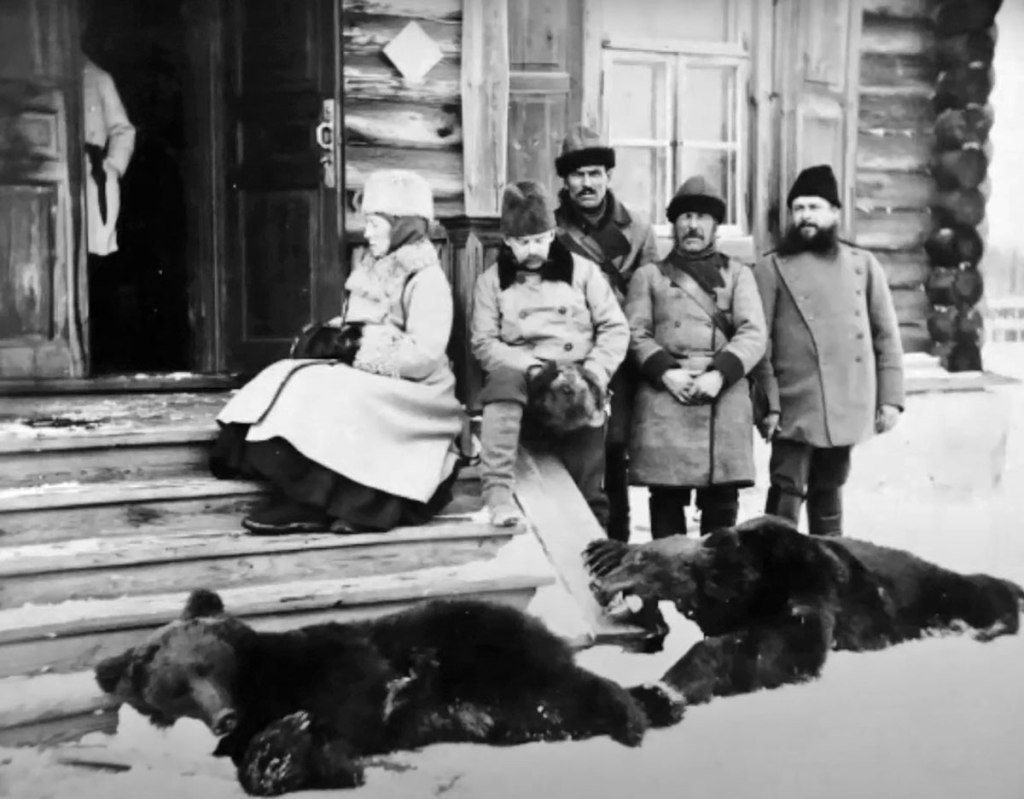
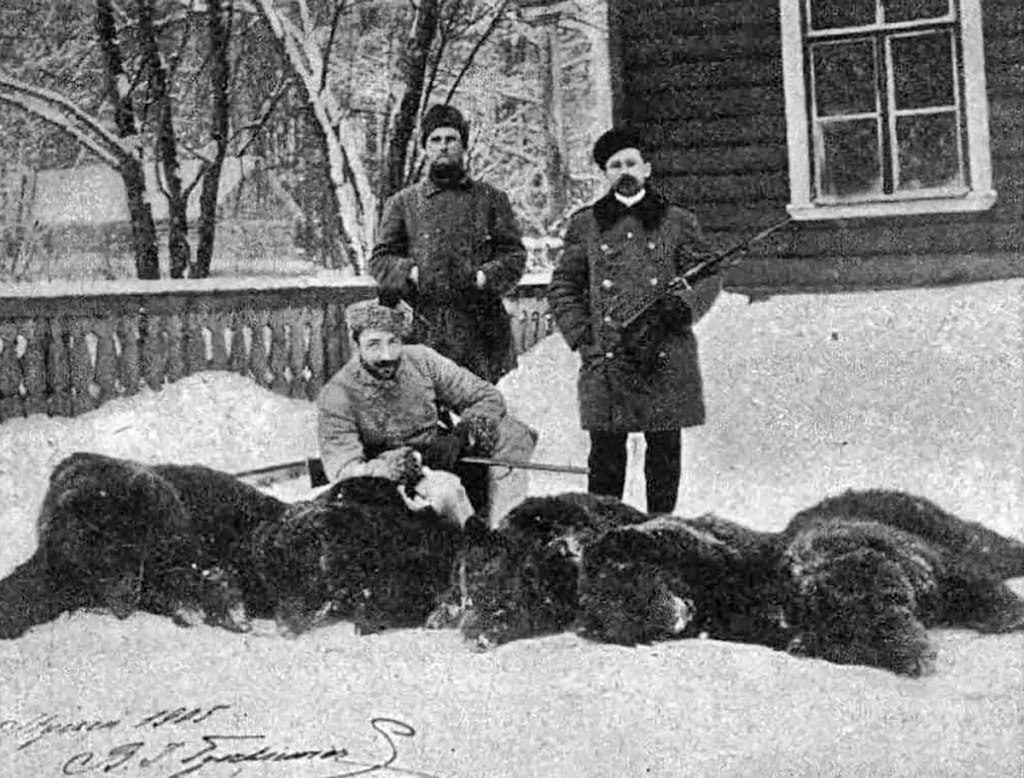
During the First World War, brown bears in the Naliboki Forest were nearly eradicated. In the 1920s, the species began to recolonize the area. By the late 1930s, records show that 30-50 brown bears inhabited the Naliboki Forest. However, during the Second World War, they were hunted to extinction by locals and guerrillas for their meat. In the late 1950s, after the war, migrating brown bears started to repopulate the Naliboki Forest, and by the 1960s, a stable population of approximately 20-30 bears had been re-established.
In the 1970s, the brown bear population was progressively poached. Local hunting wardens, Baliaslaw Sadowski, Lienard Yurevich, and Edzik Khmara, observed a significant decline in the bear population, attributing it to a lack of reproduction within the species. Over a decade, they recorded only one sighting of a mother bear with her cubs.
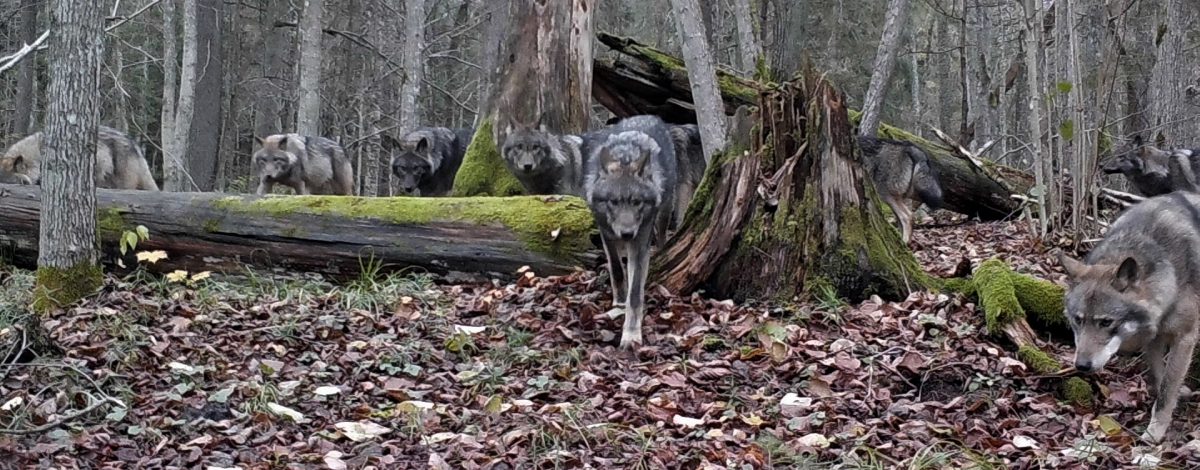
During the 1960s and 1970s, the forest was densely populated by wolves, leading to hunters culling 30-70 wolves each winter. Sadowski and Yurevich reported two instances of wolf packs attacking hibernating brown bears, chasing them over several kilometers. It is unclear if the bears had cubs during these hibernation periods.
Between the 1970s and 2011, brown bears were seldom seen in Naliboki Forest, with only occasional appearances. Generally, these transient brown bears did not stay in Naliboki Forest for long, usually residing there for less than a year.
In April 2011, around the same time, two adult bears made their way into Naliboki Forest and gradually settled in the area. After hibernation, in the warm season of 2012, these same bears were spotted in the same areas of Naliboki Forest.
During the summer of 2018, consistent observations (mainly via camera traps) revealed seven large male individuals and one or two smaller ones of uncertain sex (presumably females, inferred from the lack of visible testes). From 2020 to 2022, in the Naliboki Forest, we identified ten to twelve brown bears, about half of which (4-7 individuals) did not have visible testes, indicating they were likely females. Despite detailed tracing of the local bear population, no reproduction (i.e. no cubs) in summer has been observed, although mating pairs have been recorded every mating season from May to June.
Reevaluating Assumptions of Reproduction Failure
Initially, we attributed the absence of brown bear cubs in Naliboki Forest to disturbances caused by antler searchers during February and March. During late winter and early spring, when shed hunters were particularly active, mother bears had already given birth to cubs in their dens. According to several brown bear researchers, under such circumstances, mother bears are often hesitant to return to their dens, leading to the death of the cubs. At first glance, this explanation seemed plausible.
Over time, we gathered evidence suggesting that our initial assumption was incorrect, and another factor plays a significant role in the reproductive failure of brown bears in Naliboki Forest. Firstly, on four occasions, we found it challenging to disturb brown bears from their hibernating dens by merely walking nearby. During these instances, we passed within 8 to 20 meters of the hibernating bears 7-20 times over the winter, without realizing how close they were, and none were frightened away by our presence. Additionally, we happened to startle brown bears (only males) from their dens three times, when we occasionally approached the sleeping brown bears for a few metres and delayed nearby. The brown bears fled only a short distance (300-500 meters) and returned to hibernate in the same area, albeit at different sites. This led us to believe that disturbance from shed hunters and others is unlikely the cause of the brown bears’ reproductive issues in Naliboki Forest.
We also considered the possibility that hunting dogs might disturb hibernating mother bears, leading to cub mortality and driving them away. However, in the Naliboki Forest reserve (which constitutes half of the forest area), hunting with dogs and other forms of hunting is strictly prohibited. Furthermore, in other parts of Naliboki Forest, hunting typically ceases by mid to late January, coinciding with the start of brown bear births.
Despite dismissing the initial hypothesis related to shed hunters’ winter activities, we remained puzzled by the decline in brown bear reproduction. However, a specific incident prompted us to formulate a new, more plausible hypothesis—one that we continue to explore in our ongoing research.
Wolf Predation as a Potential Factor in Reproductive Failure
In mid-January 2021, five adult wolves launched an attack on a medium-sized brown bear at its open hibernation site. The bear mounted a defense under a spruce tree, pressing its back against the trunk before fleeing. It took cover in a dense thicket of young spruces, weaving through willow bushes, reeds, and fallen trees. The pursuing wolves halted the bear’s escape seven times in clearings or sparsely wooded areas. Each time, the bear counterattacked, using large trees and willow bushes for protection. After a 3-kilometer chase, the bear entered a small area within the thicket, marked by fallen birches, where it appeared to wound one of the wolves, stripping skin from its back. Subsequently, the bear found refuge in a larger thicket, prompting the wolves to abandon their pursuit.
Reflecting on the incident described earlier, we recalled two similar instances reported by local hunting wardens (Baliaslaw Sadowski, Lienard Yurevich, and Edzik Khmara) in the Naliboki Forest during the 1970s. This led us to consider the possibility that strong wolf packs could intimidate a mother brown bear, force her to abandon the area, and prey on her cubs. Given the substantial wolf population in Naliboki Forest, such events could occur several times each winter. This frequency of wolf aggression towards mother brown bears might be sufficient to halt the reproduction of the species within the forest.
With respect to the above-described occasions, an interesting question may be raised. If wolves are able to stop reproduction in a bear population, how could these two carnivore species coexist for such a long evolutionary time?
The possible answer connects with several stages of human impact on wildlife. First, forest exploitation, drainage, and agriculture led to a strong increase in the habitat’s carrying capacity for bison, elk, red deer, and lynx — species that are hostile to wolf breeding. In turn, when there are many of these species inimical to wolf reproduction, wolf pups hardly survive. In this blog we have shown that impact in Naliboki Forest in many posts. Second, when wolf pups survive normally, in winter wolf packs consist of wolf parents and their pups of this and previous biological years, as well as a few (one or two) other subordinate wolves. So, in a normal situation there are 2–4 adult wolves in a pack, and such a pack seems too weak to attack a hibernating bear. In contrast, when only a few wolf pups survive, wolves still create packs by subordinating roaming adult wolves. In such a situation there are 4–7, and sometimes even more, adult wolves in a pack. Such strong packs can attack hibernating bears, particularly smaller bear mothers with cubs. They scare the mothers away and kill the cubs.
Our analysis has progressed further. In the 1990s and early 2000s, I, Vadim Sidorovich, spent extensive time in the forested regions of European Russia — specifically Pskov, Tver, Vologda, Smolensk, and Novgorod. Interestingly, I observed a near absence of wolves approximately 100 km from the Belarusian border. Wolf tracks on forest roads and riverbanks were sporadic, not daily. The effort required to find wolf footprints in Naliboki Forest in Belarus was disproportionately higher compared to those Russian regions — a stark contrast.
In those Russian regions, wild ungulate density was remarkably low, likely leaving wolves food-deprived and preventing them from establishing a dense population. However, I encountered many brown bears in those same regions of Russia. Tracks of mother brown bears with cubs occurred surprisingly often. Their scats mainly consisted of herbal remains and insects, indicating herbivorous and entomophagous behavior. Notably, the low numbers of wild ungulates did not significantly affect brown bears. In these Russian forest massifs, where wolves were scarce, mother brown bears successfully reproduced, and the brown bear population thrived.
Besides the low number of wild ungulates in those regions of Russia also bears themselves could impact (even stop) the reproduction in wolves, when bears got a relatively high population density somehow. We faced with such a situation in Naliboki Forest every breeding season in wolves. For instance, in the late spring of 2025 in Naliboki Forest there were only three bears, and having so few bears, 3 out of 8 wolf litters suffered from those bears a lot.
The persistent absence of brown bear cubs in Naliboki Forest, despite the presence of mating pairs, points to a complex interplay of factors influencing reproductive success. Our observations suggest that the high density of wolves and their aggressive interactions with brown bears, particularly during denning periods, may be a significant deterrent to successful breeding. This hypothesis aligns with contrasting scenarios in European Russia, where lower wolf populations correlate with thriving brown bear reproduction.
 Zoology by Vadim Sidorovich
I have read a few articles which contain camera trap photographs of Bears in Naliboki and a few other places in Belarus , when I have non of the articles have even mentioned or shown photographs of Bear Cubs , in fact I have asked myself the question many times as to why is this and tried to find out more , this is the first time I have come across any sort of explanation , a very interesting hypothesis and enjoyable read , thank you Vadim
LikeLike
Thanks, John.
LikeLike
The observations of Vadim on bear, wolf and lynx (the three European big predator), and the interaction between them are very interesting about the complexity of ecological relationship predator-prey ; he shows the influence of human activities (hunting) on ungulates populations which are prey of the big predators
LikeLike
Thanks Jean-Claude
LikeLike
These observations are highly interesting ! as written Jean Claude ! and not known in western Europe where all predators have nearly disappeared
Annik Schnitzler
LikeLike