Skip to content

Zoology by Vadim Sidorovich

  • Home
  • About
  • Contacts
Zoology by Vadim Sidorovich

Study and conservation activity in relation to the European mink

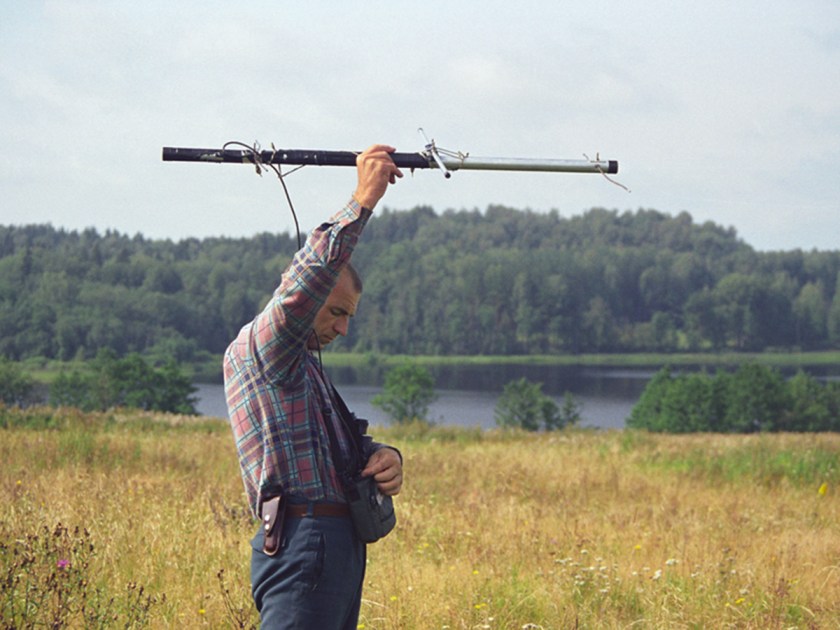
Intensive study on population ecology of the European mink Mustela lutreola as a critically endangered species in the Lovat terrain, Paazierre Forest, northern Belarus in 1988-2000, particularly the researches in 1995-1997 in collaboration with Prof. Dr. David Macdonald and Dr. Hans Kruuk, were a serious school for me, and that advanced a lot my professional knowledge and skills. For those three years I was accepted as a member of Wildlife Conservation Research Unit (WildCRU) in the Oxford University and visited it several times per year.  For the mentioned studies there were applied the whole variety of available research methods of mammal population ecology including a lot of telemetry. In total we radiotagged 38 European mink (18 inds were radiotracked for long enough), 69 American mink Neovison vison (35) and 19 polecats Mustela putorius (12).

In 1995, specially for the study on the European mink there was established a field station in the Zadrach hamlet, Haradok district, Vitebsk region of Belarus. Zadrach field station still exists. After the European mink project (1997-2010) the Zadrach fieldstation was tensely used to investigate the vertebrate predator-prey community. Nowadays it is mainly visited for some study on brown bears.

In 1999-2000 I successfully helped to Dr.Tiit Maran with eradication of American mink in the Huiimaa islands, Estonia as well as checked the habitat suitability for the European mink there.

Those studies and the species conservation output were published in a series of articles and in the three books that may be download following the links below.

european mink D.W. Macdonald, V. Sidorovich, T. Maran, H.Kruuk. “European mink, Mustela lutreola: Analyses for Conservation” – WildCRU and Darwin Initiative, 2002.

analysis-1“Analysis of vertebrate predator-prey community. Studies within the European Forest zone in terrains with transitional mixed forest in Belarus” – Tesey, 2011

mustelidsin Belarus
“Mustelids in Belarus” – Zolotoy Ulej, 1997 
eumwinterstream
The European mink in the Lovat terrain, the Piashchanka small river, 1992
The European mink
European mink feeds on common frogs in the place of their spawning, the valley of the Lovat river, 1993
European mink, Vadim Sidorovich, Belarus
European mink with captured common frog, the marshy valley of the Lovat river, 1993
Vr_197_у
Vadim Sidorovich during the lave-capturing of European mink along the Lovat river, 1996
eumradicollared
Radiotagged European mink at the Lovat river, 1997
radiotracking
While radiotracking European mink at the Zadrach lake, 1997
Изображение 006
Zadrach fieldstation that was established for the study on the European mink in 1995, the photo was taken in 1999

Share:

  • Click to email a link to a friend (Opens in new window) Email
  • Click to share on Facebook (Opens in new window) Facebook
  • Click to share on WhatsApp (Opens in new window) WhatsApp
  • Click to share on Telegram (Opens in new window) Telegram
  • Click to share on X (Opens in new window) X
  • Click to print (Opens in new window) Print
  • More
  • Click to share on LinkedIn (Opens in new window) LinkedIn

Related

Unknown's avatarAuthor Vadim SidorovichPosted on 15.06.201715.06.2017Categories Former studiesTags American mink, European mink, population ecology

Post navigation

Previous Previous post: My zoological beginning
Next Next post: Analysis of predation in vertebrate community

Recent Posts

  • At least ten-year-old female lynx Aurelja has two kittens this year
  • Some findings on the development of a wolf reproduction clan
  • Footage of a wild boar attempting to attack an adult wolf
  • Again, higher survival of wolf pups in the conditions of lower numbers of lynxes and brown bears in summer 2025
  • Outstandingly frequent marking by wolves in summer and early autumn: what does it mean?
  • One Important Factor Overlooked in the European Mink’s Demise
  • Wolf breeding clan under conditions of surplus prey abundance in Naliboki Forest: a new phenomenon
  • Another brown bear attack on wolf pups discovered
  • Study on the wolf breeding in Naliboki Forest (April-May 2025): a short report
  • Abundance of signs of denning in wolves in relation to weather

Reading mammal activity signs

track guide

Naliboki Forest blog

Naliboki Forest blog
Blog about Naliboki terrain and its inhabitants

Top Posts

  • At least ten-year-old female lynx Aurelja has two kittens this year
    At least ten-year-old female lynx Aurelja has two kittens this year
  • Footage of a wild boar attempting to attack an adult wolf
    Footage of a wild boar attempting to attack an adult wolf
  • Multi-breeding in a  wolf pack. Nowadays it is commoner than breeding of a pair in Naliboki Forest
    Multi-breeding in a wolf pack. Nowadays it is commoner than breeding of a pair in Naliboki Forest
  • How wolves break the idea of the species monogamy
    How wolves break the idea of the species monogamy
  • Some findings on the development of a wolf reproduction clan
    Some findings on the development of a wolf reproduction clan
  • Again, higher survival of wolf pups in the conditions of lower numbers of lynxes and brown bears in summer 2025
    Again, higher survival of wolf pups in the conditions of lower numbers of lynxes and brown bears in summer 2025

Recent Posts

  • At least ten-year-old female lynx Aurelja has two kittens this year
  • Some findings on the development of a wolf reproduction clan
  • Footage of a wild boar attempting to attack an adult wolf
  • Again, higher survival of wolf pups in the conditions of lower numbers of lynxes and brown bears in summer 2025
  • Outstandingly frequent marking by wolves in summer and early autumn: what does it mean?
  • One Important Factor Overlooked in the European Mink’s Demise
  • Wolf breeding clan under conditions of surplus prey abundance in Naliboki Forest: a new phenomenon
  • Another brown bear attack on wolf pups discovered
  • Study on the wolf breeding in Naliboki Forest (April-May 2025): a short report
  • Abundance of signs of denning in wolves in relation to weather

Tags

  • aggressive encounter
  • American mink
  • badger
  • beaver
  • behaviour
  • bison
  • books
  • breeding
  • brown bear
  • carrion consumers
  • climate change
  • communication
  • competition
  • denning
  • diet
  • dietary studies
  • diurnal raptors
  • eagle owl
  • ecotourism
  • ecotrip
  • European mink
  • global warming
  • great grey owl
  • interference
  • interspecific interaction
  • inundations by beavers
  • life style
  • lynx
  • lynx-wolf interference
  • lynx behaviour
  • lynx call
  • lynx reproduction
  • marking behaviour
  • mating
  • mortality causes
  • Naliboki Forest
  • nursing lynx
  • otter
  • owls
  • pack multi-breeding
  • pine marten
  • polecat
  • population decline
  • population ecology
  • population spatial structure
  • predation
  • predators
  • raccoon dog
  • raptors
  • red deer
  • red fox
  • reproduction
  • research establishment
  • root vole
  • scavengers
  • signs of activity
  • snakes
  • social behaviour
  • stoat
  • stone marten
  • summer drought
  • tracks
  • tree climbing
  • vertebrate community
  • water vole
  • weasel
  • wildlife
  • Wildlife trip
  • wolf
  • wolf-bear interference
  • wolf breeding
  • wolf lynx
  • wolf mortality
  • wolf pups
  • wolf reproduction

Enter your email address to subscribe to this blog and receive notifications of new posts by email.

Join 2,367 other subscribers
  • Home
  • About
  • Contacts
Zoology by Vadim Sidorovich Blog at WordPress.com.
  • Subscribe Subscribed
    • Zoology by Vadim Sidorovich
    • Join 237 other subscribers
    • Already have a WordPress.com account? Log in now.
    • Zoology by Vadim Sidorovich
    • Subscribe Subscribed
    • Sign up
    • Log in
    • Copy shortlink
    • Report this content
    • View post in Reader
    • Manage subscriptions
    • Collapse this bar
 

Loading Comments...