Adult male assistance in lynxes in Belarus: ideas and inferences

Co-author Irina Rotenko

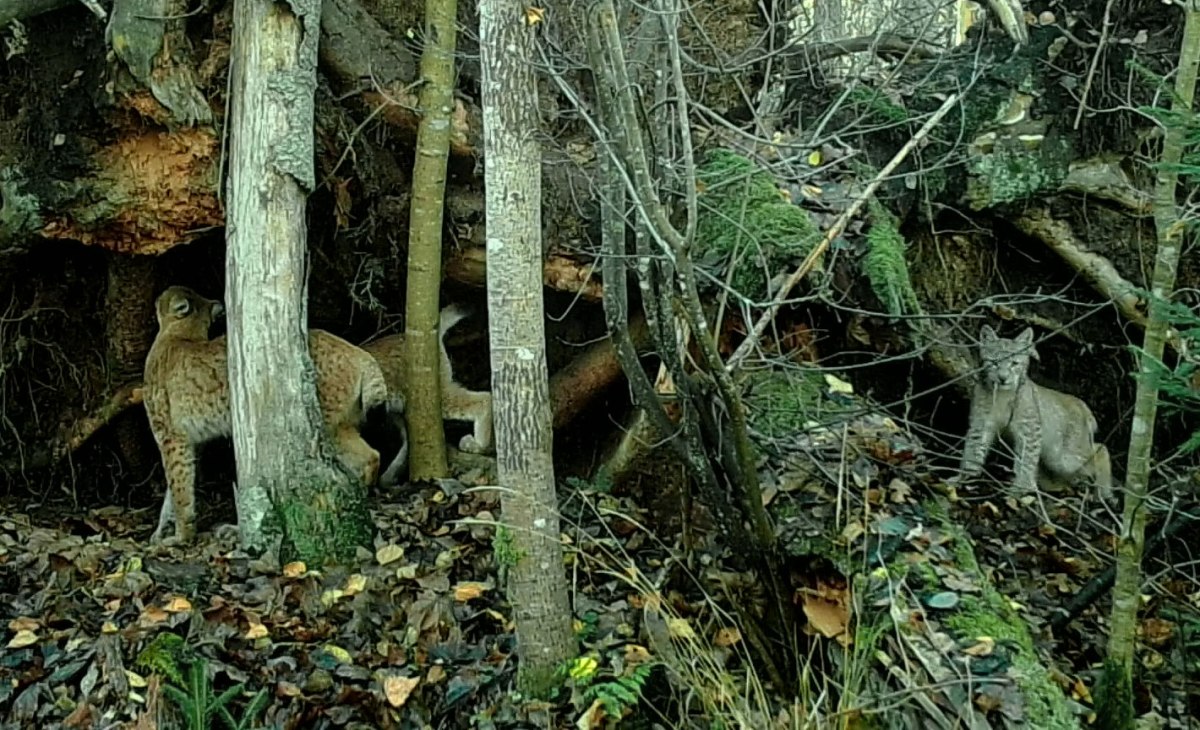
In mammals, it is not uncommon for adult males to assist mothers or engage in continuous fathering, and the lynx species Lynx lynx shows such behavior as well.

Continue reading “Adult male assistance in lynxes in Belarus: ideas and inferences”

Accommodating a yearling male lynx in the original den where it was reared

Co-author Irina Rotenko

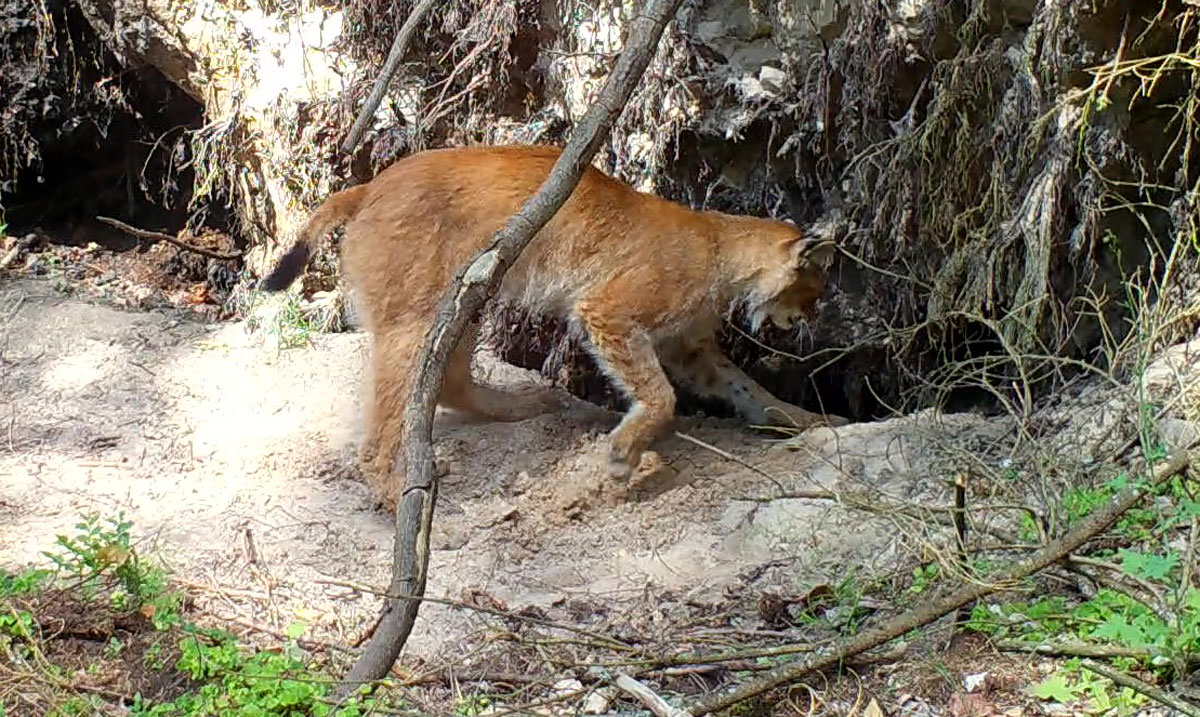
At the start of June, we discovered wolf pup tracks alongside numerous lynx footprints nestled between the root plates of two toppled spruces. We installed a camera trap at this location. Following our visit, the wolf pack seemed to have moved elsewhere. The camera trap documented numerically repeated visits by a yearling male lynx.

Continue reading “Accommodating a yearling male lynx in the original den where it was reared”

Tracking the denning behavior of a model female lynx during the summer of 2024

Co-author Irina Rotenko

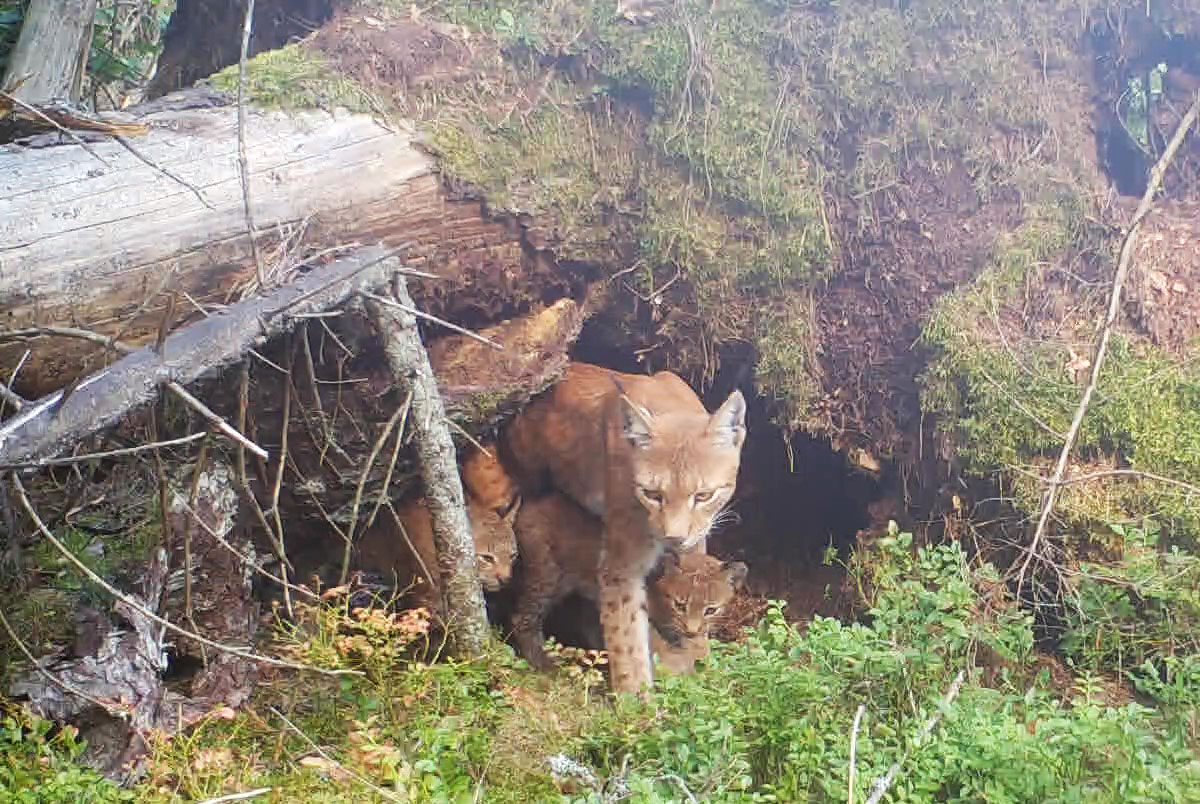
In mid-May 2023, an adult female lynx, whom we refer to as Mikhalina, gave birth within a densely layered treefall spanning approximately three hectares. She had three kittens. The following two photos depict the treefall.

Continue reading “Tracking the denning behavior of a model female lynx during the summer of 2024”

Long-term frequent usage of a particular site by lynxes

Co-author Irina Rotenko

In Naliboki Forest (the central-northern Belarus) as well as in other habitats in an individual lynx home range there are quite a lot sites, which are used by the individual lynx for a number of purposes.

Continue reading “Long-term frequent usage of a particular site by lynxes”

Lynx addiction to road pipes

Co-author Irina Rotenko

In one of the former posts we have already addressed to the question of usage of road pipes by lynxes. In the given post we provide some further results on the question including respective video-footage, while the former post was illustrated only by photo-registrations.

Continue reading “Lynx addiction to road pipes”

Scientific book “Behaviour and ecology of the Eurasian lynx” has been published

This scientific book gives the results of the long-term studies on the Eurasian lynx Lynx lynx in Belarus, mainly in Naliboki Forest and Paazierre Forest. Population structure, breeding, diet and prey supply as well as the variety of behavioural traits were considered. Among behavioural questions there were investigated sociality, hunting modes, mating and denning behaviour, territorial marking, sheltering and interspecific interference. The monograph presents not only the regional aspects of lynx biology, but also includes many new findings for the Eurasian lynx overall.

Continue reading “Scientific book “Behaviour and ecology of the Eurasian lynx” has been published”
Video-documentation of stay of lynx kittens, when their mother went for hunting

Co-author Irina Rotenko

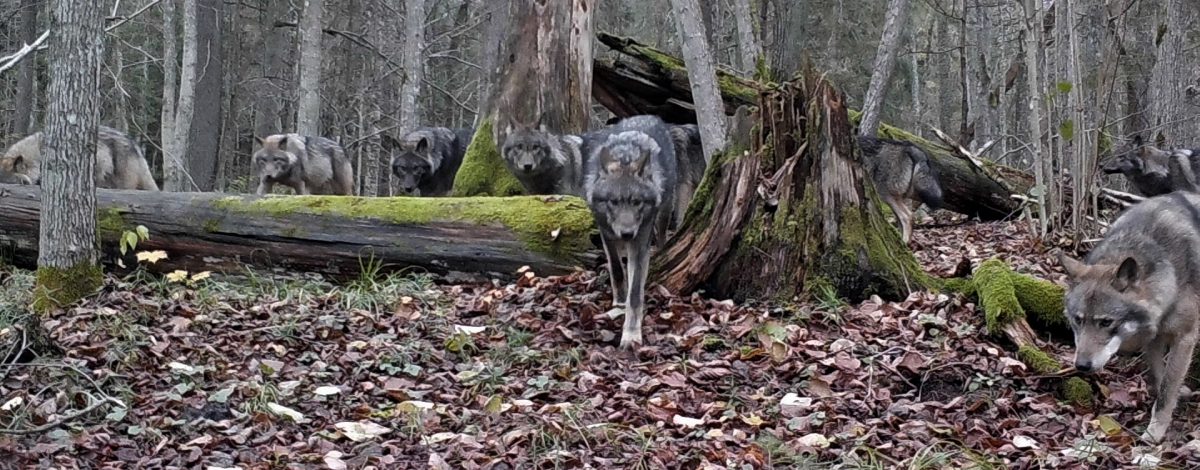
Mother lynx left her kittens in a sheltered place at a small beaver pond surrounded by reed thicket and went for hunting. After half an hour play, the kittens went to rest in the reed stand. Three hours later lynx mother reunited with them.

Continue reading “Video-documentation of stay of lynx kittens, when their mother went for hunting”

Results of study on Eurasian lynx post-denning family life in Naliboki Forest during the warm season of 2021

Coauthor Irina Rotenko

During the warm season of 2021 in Naliboki Forest we investigated post-denning life of four families of Eurasian lynxes. Doing that, we applied about sixty camera traps. Among the mother lynxes there were three model females (Aurelija, Jurchykha and Darota), which we traced for several years before, and one newly appeared mother lynx. The number of kittens varied from one to three: 1 (the new mother), 2 (Jurchykha and Aurelija) and 3 (Darota).

Continue reading “Results of study on Eurasian lynx post-denning family life in Naliboki Forest during the warm season of 2021”

Does the Eurasian lynx avoid strictly cold water?

Co-author Irina Rotenko

It looks like among both amateurs and researchers of the Eurasian lynx an opinion is wide-spread that the species strictly avoids cold water, in particular crossing cold waters of streams by swimming. Before camera-trapping by dealing with lynxes already quite a lot (study on population dynamics and diet in connection with changes in prey supply), we think like that, too.

Continue reading “Does the Eurasian lynx avoid strictly cold water?”

Story of consuming of four carcasses of roe deer killed by adult male lynx with implication for a role of adult male in feeding of kittens

Co-author Irina Rotenko

One of the most important pressing questions of the Eurasian lynx behaviour and ecology is a role of an adult male in family life. It is well known that an adult male lynx accepts from one to three adult females in its home range. So, it may be up to three lynx mothers with kittens in the territory that is occupied by an adult male lynx. In our case in Naliboki Forest (central-western Belarus) there were usually two such families, rarer one or three families inside a territory of an adult male lynx.

Continue reading “Story of consuming of four carcasses of roe deer killed by adult male lynx with implication for a role of adult male in feeding of kittens”