
Some findings on the development of a wolf reproduction clan

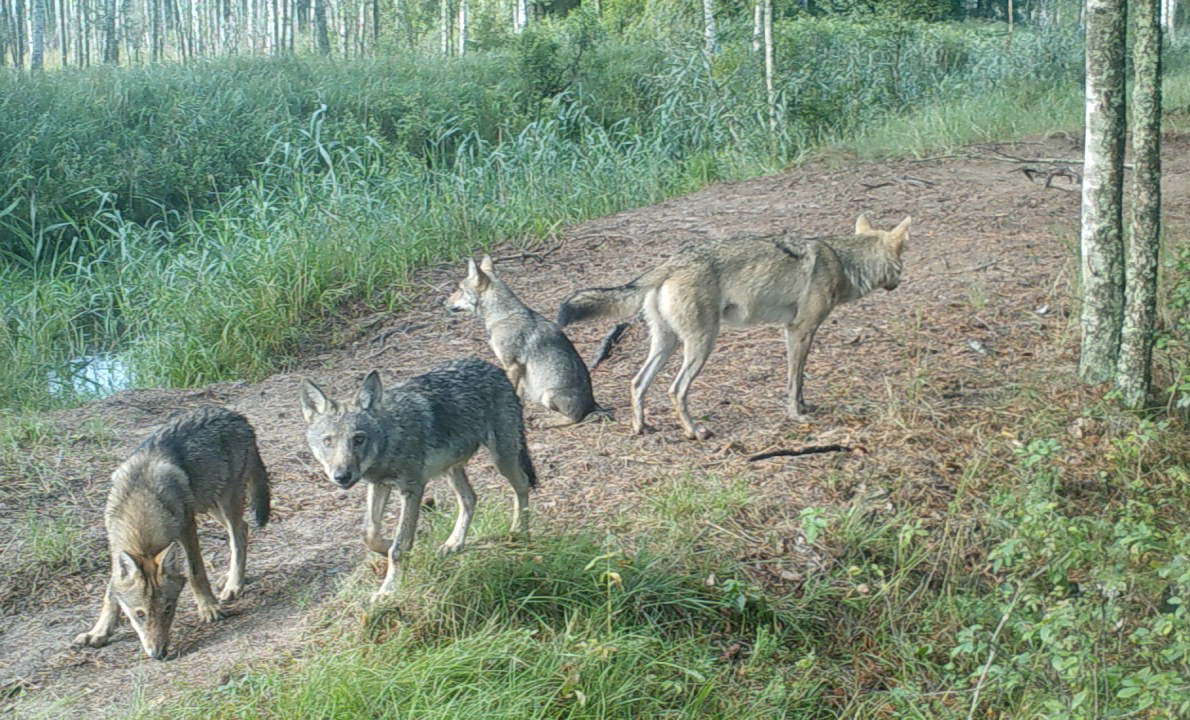
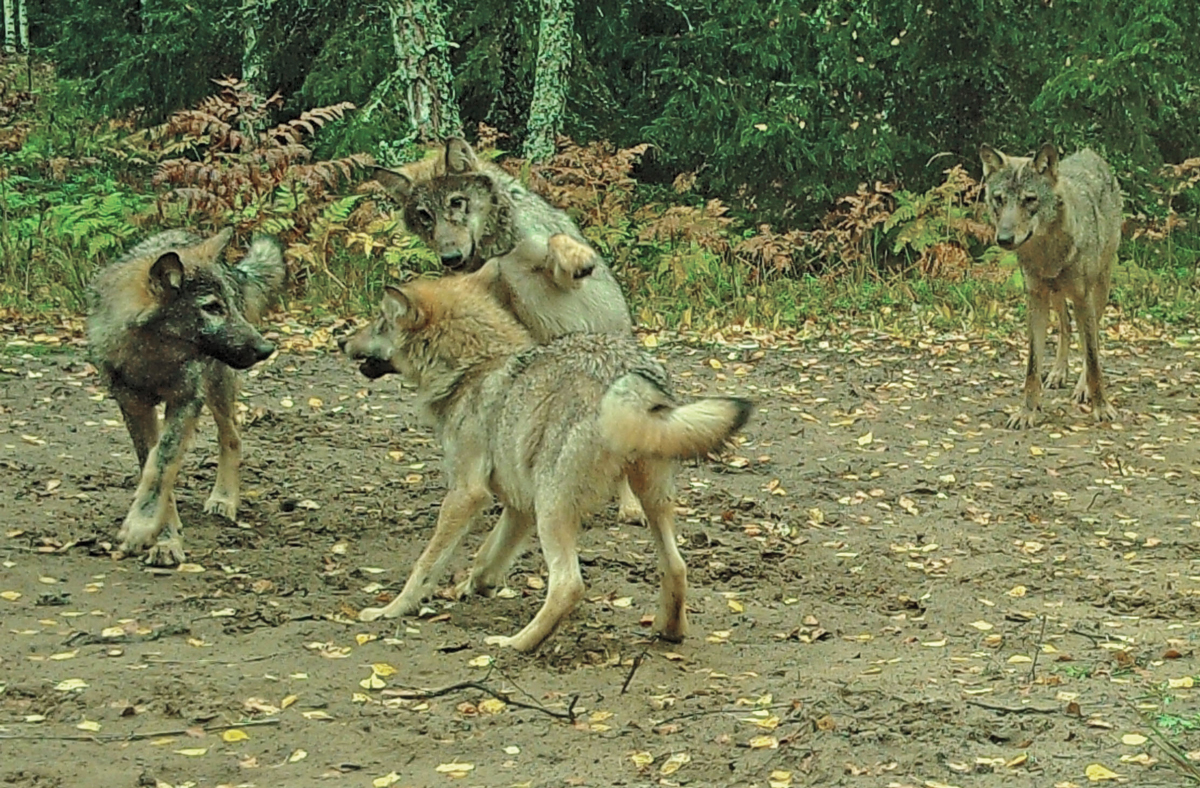
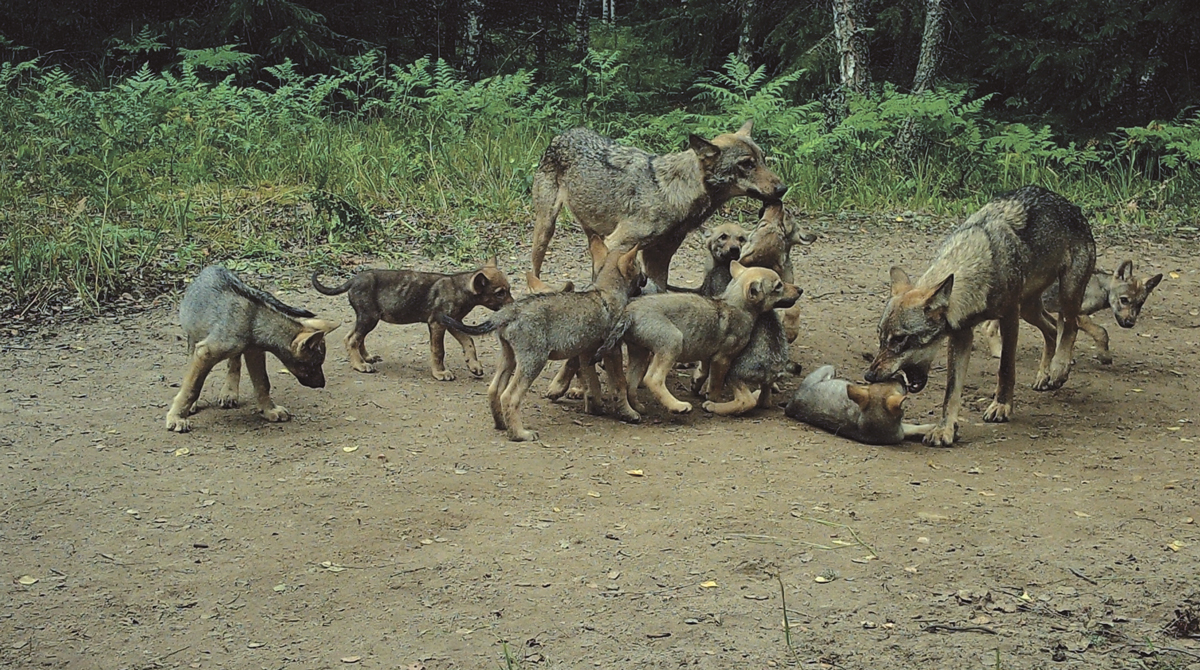
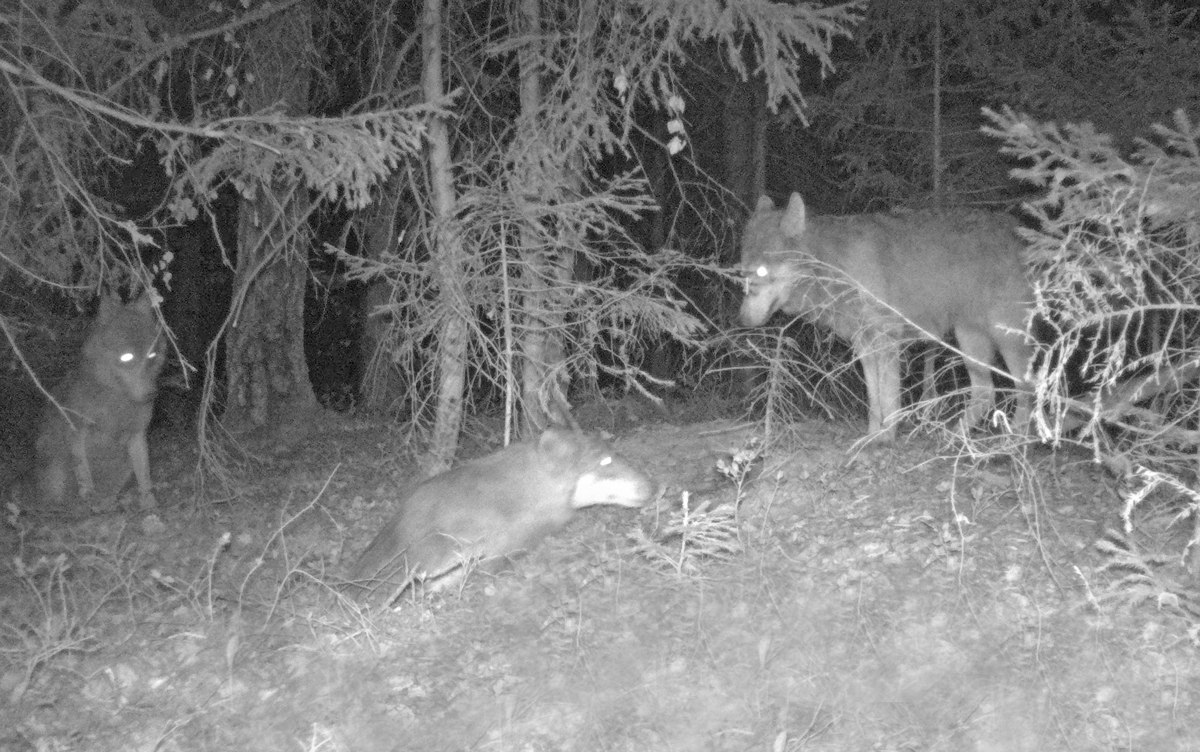
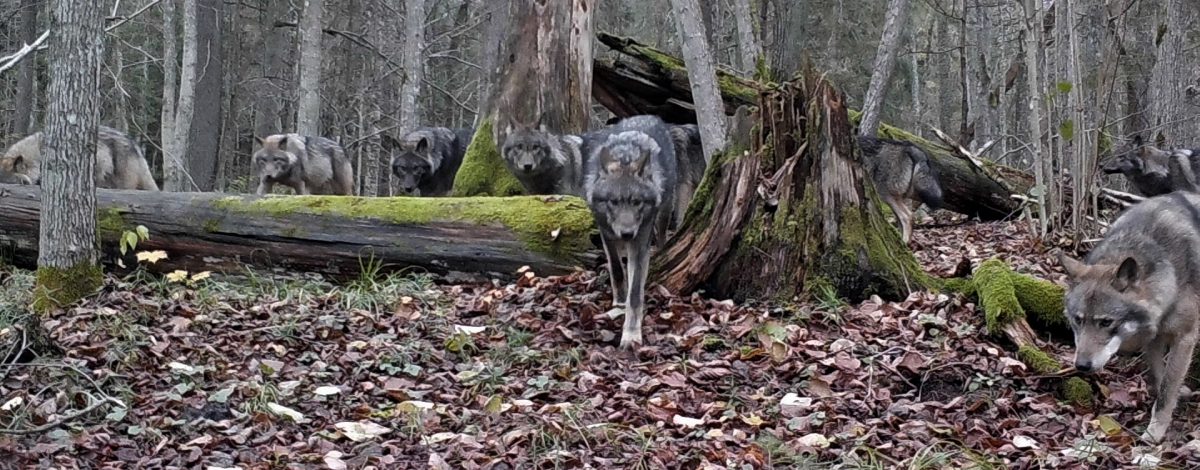
In Naliboki Forest in May-June 2025 within an area of only about 140 km², we recorded three distinct wolf families (each with pups) living in exceptionally close proximity throughout the denning season. One of these families had two simultaneously breeding females (double-breeding), two of them had one litter each, while a separate group of four non-breeding adults and subadults lived there, ranging between the families.  We define this newly observed social structure during breeding season as a breeding clan.

Continue reading “Some findings on the development of a wolf reproduction clan”

Footage of a wild boar attempting to attack an adult wolf

Co-author Irina Rotenko

Recently, we captured an interesting moment when a large wild boar tried to attack an adult wolf just after it had crossed a river via a beaver dam.

Continue reading “Footage of a wild boar attempting to attack an adult wolf”

Again, higher survival of wolf pups in the conditions of lower numbers of lynxes and brown bears in summer 2025

Co-authors: Louise Giovannelli and Irina Rotenko

From mid-August to the end of October, we closely monitored the wolf families that had been registered as denning in Naliboki Forest (central-western Belarus) in late spring of this year. In addition to our spring findings, we discovered in early autumn that one breeding group had previously gone unnoticed. This group exhibited double-breeding behavior.

Continue reading “Again, higher survival of wolf pups in the conditions of lower numbers of lynxes and brown bears in summer 2025”

Outstandingly frequent marking by wolves in summer and early autumn: what does it mean?

Co-authors: Louise Giovannelli and Irina Rotenko

Usually, from May until the end of September, wolves engage in territorial marking only sparingly. Breeding individuals, in particular, tend to avoid excessive marking. Non-breeders continue territorial marking at levels similar to those in the cold season, or even noticeably less.

Continue reading “Outstandingly frequent marking by wolves in summer and early autumn: what does it mean?”

Wolf breeding clan under conditions of surplus prey abundance in Naliboki Forest: a new phenomenon

Co-author: Irina Rotenko

Over the last decades in Naliboki Forest (central-western Belarus), we have repeatedly documented multi-breeding wolf packs — most often double broods, occasionally triple broods. We now estimate that roughly two-thirds of wolf packs in this region reproduce in this intensive, multi-breeding strategy. This is likely driven by a combination of abundant prey and continued human persecution of wolves.

Continue reading “Wolf breeding clan under conditions of surplus prey abundance in Naliboki Forest: a new phenomenon”

Another brown bear attack on wolf pups discovered

Co-author Irina Rotenko

In late April of this year, we discovered a wolf den where the pups had been extirpated by a brown bear. Just yesterday, a new incident was recorded – another brown bear attacked wolf pups.

Continue reading “Another brown bear attack on wolf pups discovered”

Study on the wolf breeding in Naliboki Forest (April-May 2025): a short report

Co-authors: Louise Giovannelli and Irina Rotenko

Throughout April and May 2025, we conducted a study on wolf breeding within the Naliboki Forest (the central-western region of Belarus), covering an area of approximately 1,800 square kilometers.

Continue reading “Study on the wolf breeding in Naliboki Forest (April-May 2025): a short report”

Abundance of signs of denning in wolves in relation to weather

Co-authors: Irina Rotenko and Louise Giovannelli

In this short post, we examine the clear relationship between the abundance of wolf denning signs and weather conditions during the denning period in wolves in Naliboki Forest, the central-western region of Belarus.

Continue reading “Abundance of signs of denning in wolves in relation to weather”

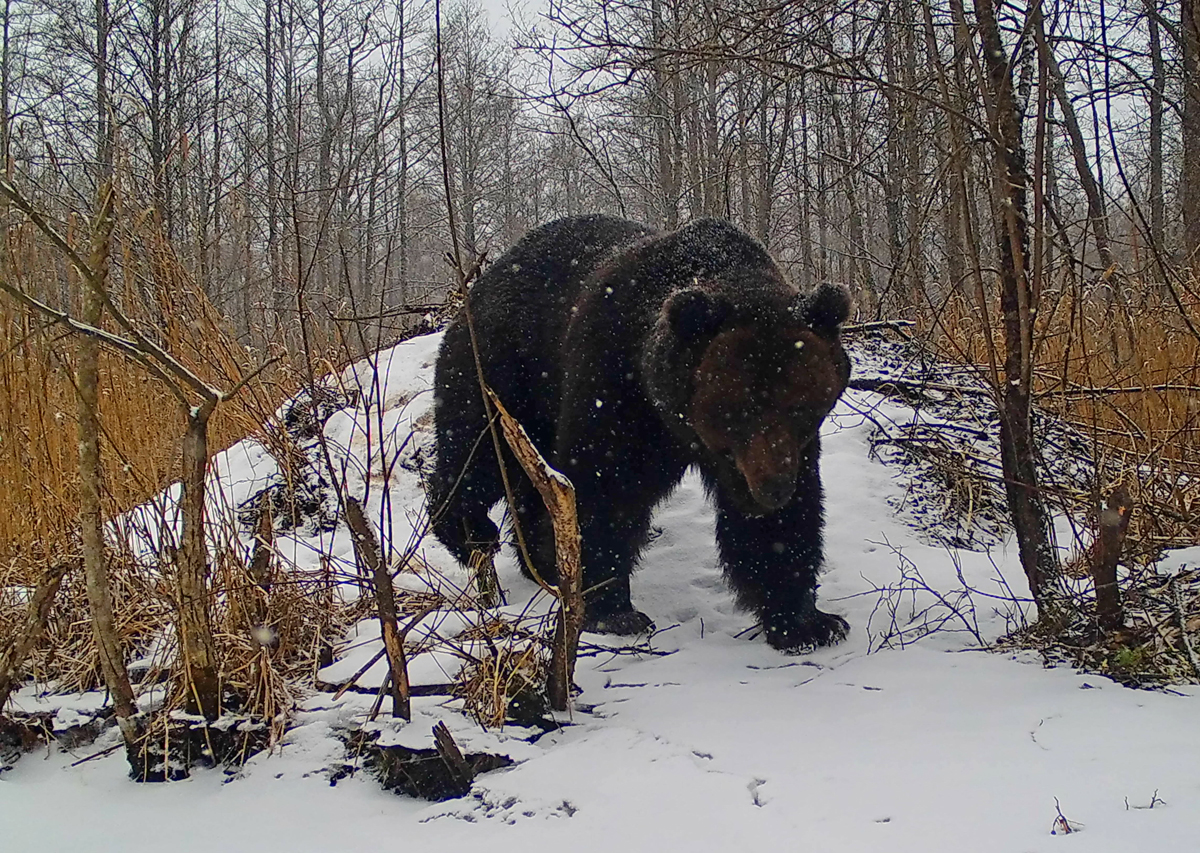
The Reproductive Struggle of Brown Bears in Naliboki Forest: An Investigative Hypothesis

Co-author Irina Rotenko

Historical Context and Current State of Brown Bears

During the Great Lithuanian period, from the 16th to the 18th centuries, brown bears were abundant in the Naliboki Forest and surrounding forest massifs. Reports of hunting these animals frequently appear in the game husbandry documents of the Radziwills and other magnates. Up until the First World War, the brown bear remained a standard game species and a relatively common trophy in the hunting collections of the local elite, indicating a high-density population in the Naliboki Forest.

Continue reading “The Reproductive Struggle of Brown Bears in Naliboki Forest: An Investigative Hypothesis”

Results of wolf denning study in Naliboki Forest (April-May 2024)

Co-authors Irina Rotenko and Viktar Kasilovich

During the 2024 wolf denning season in Naliboki Forest, we initiated our study in early April and, as of early June, continue to employ camera traps to monitor three wolf families with pups. Our previous research (Sidorovich and Rotenko, 2019, along with several blog posts) indicated that lynxes, brown bears, and bison exhibit aggressive behavior towards wolf breeding. Additionally, red deer and elks have been known to attack wolf dens housing pups and those with roaming young pups. Regarding the aforementioned wild mammals previously identified as antagonistic to wolf breeding in Naliboki Forest, we have observed changes in their numbers and distribution compared to previous years.

Continue reading “Results of wolf denning study in Naliboki Forest (April-May 2024)”