The Reproductive Struggle of Brown Bears in Naliboki Forest: An Investigative Hypothesis

Co-author Irina Rotenko

Historical Context and Current State of Brown Bears

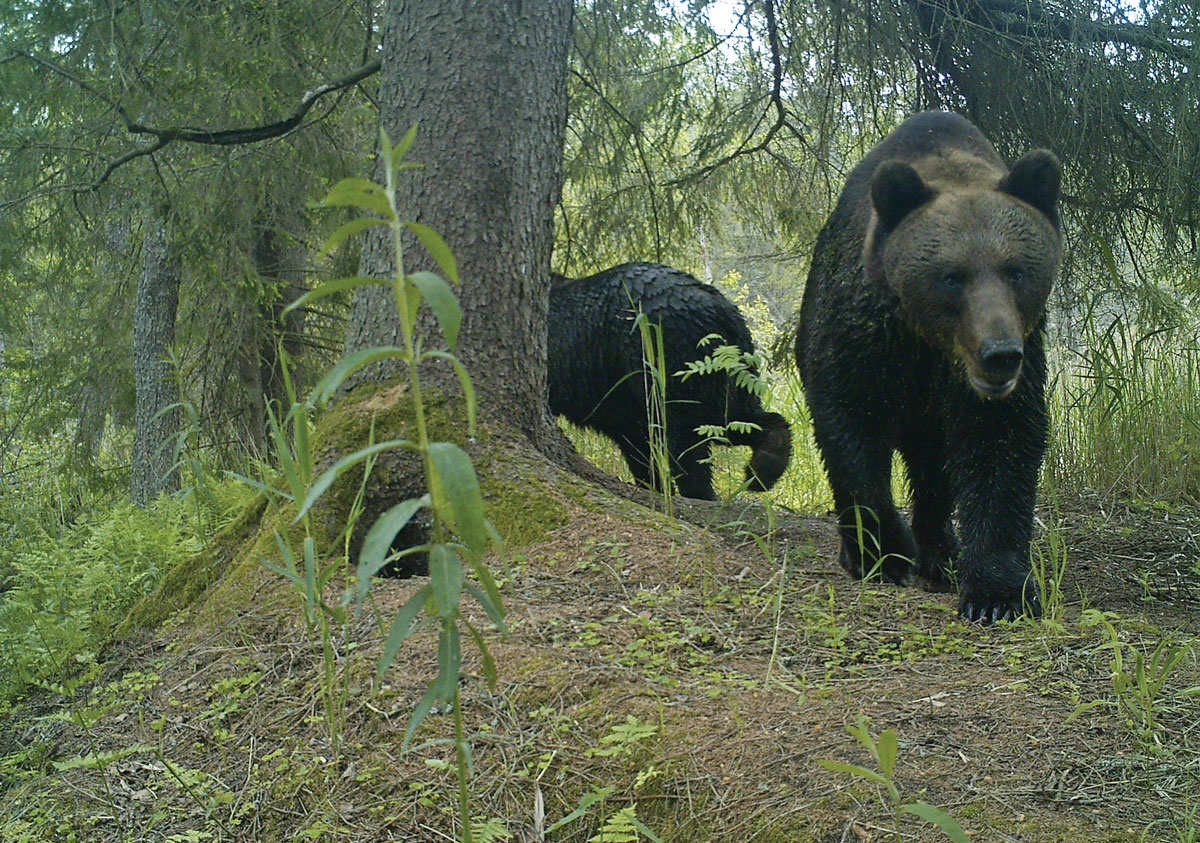
During the Great Lithuanian period, from the 16th to the 18th centuries, brown bears were abundant in the Naliboki Forest and surrounding forest massifs. Reports of hunting these animals frequently appear in the game husbandry documents of the Radziwills and other magnates. Up until the First World War, the brown bear remained a standard game species and a relatively common trophy in the hunting collections of the local elite, indicating a high-density population in the Naliboki Forest.

Continue reading “The Reproductive Struggle of Brown Bears in Naliboki Forest: An Investigative Hypothesis”
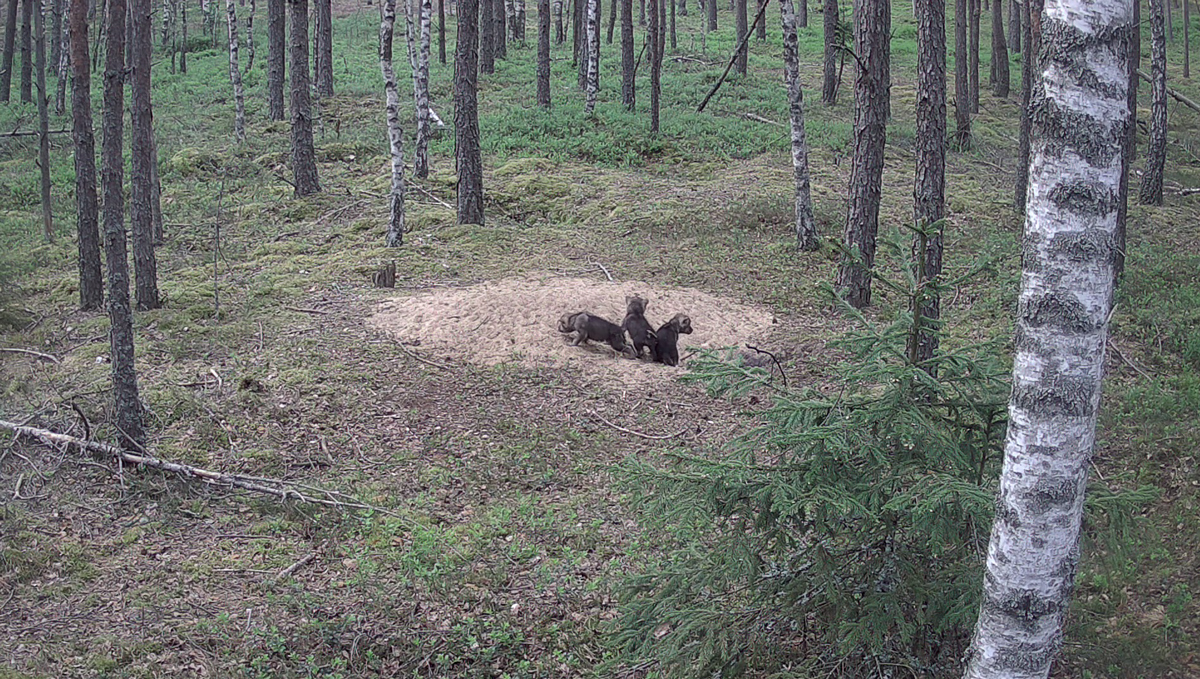
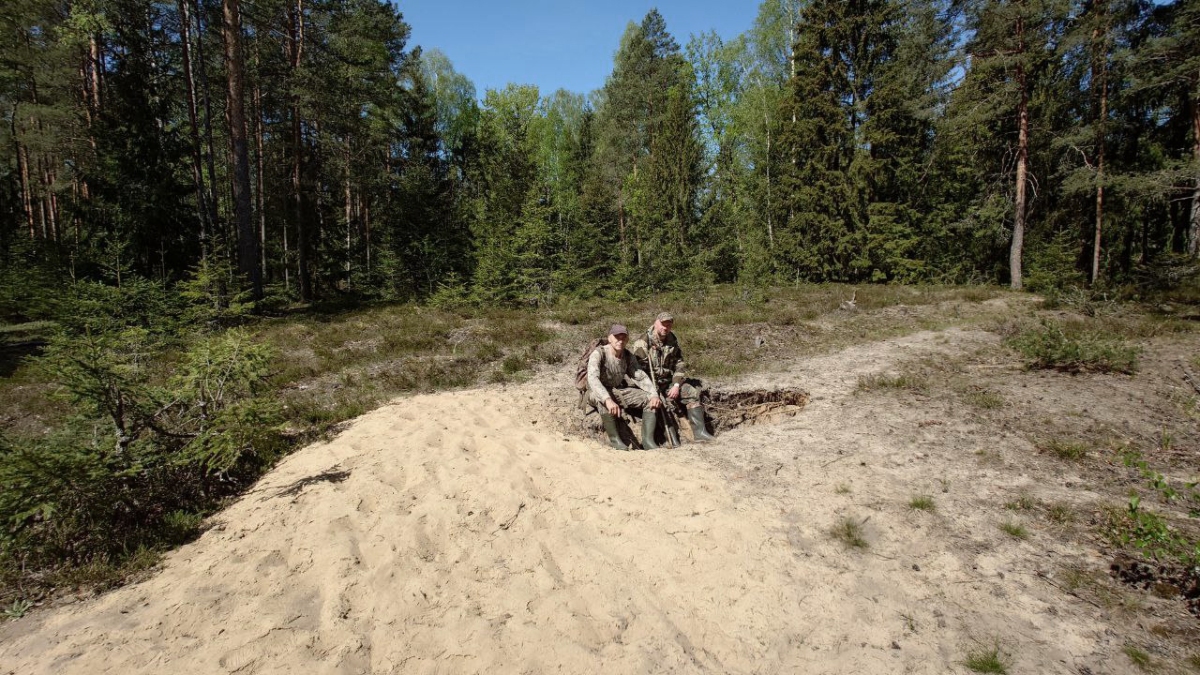
Results of wolf denning study in Naliboki Forest (April-May 2024)

Co-authors Irina Rotenko and Viktar Kasilovich

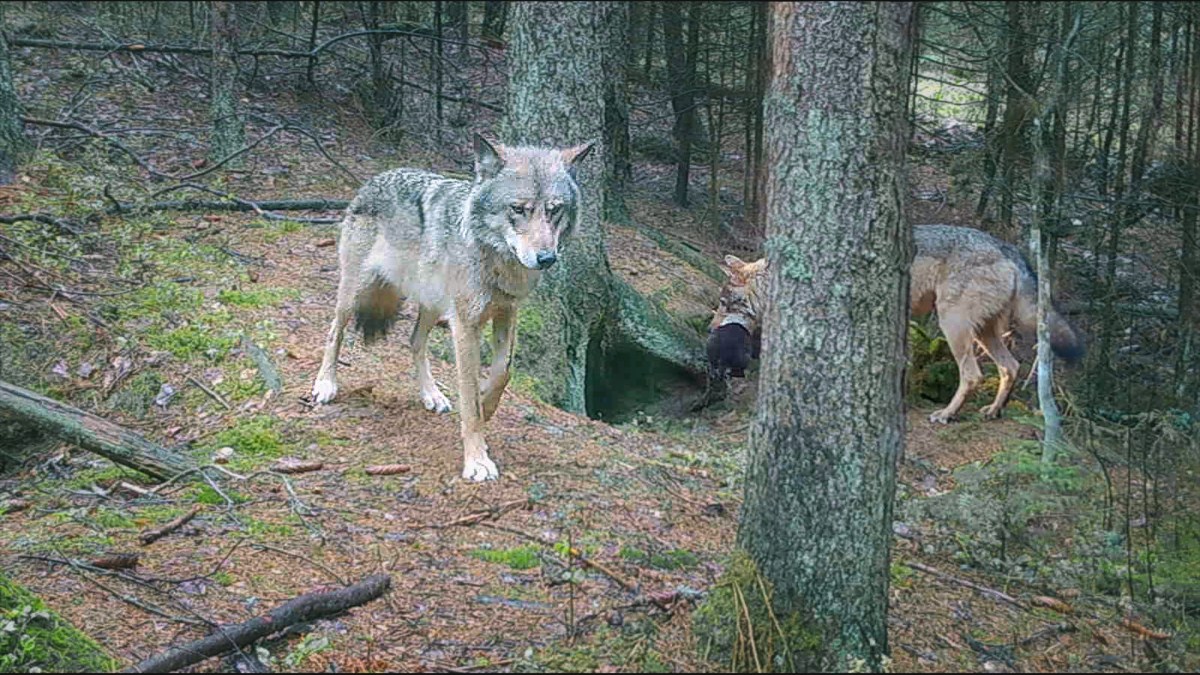
During the 2024 wolf denning season in Naliboki Forest, we initiated our study in early April and, as of early June, continue to employ camera traps to monitor three wolf families with pups. Our previous research (Sidorovich and Rotenko, 2019, along with several blog posts) indicated that lynxes, brown bears, and bison exhibit aggressive behavior towards wolf breeding. Additionally, red deer and elks have been known to attack wolf dens housing pups and those with roaming young pups. Regarding the aforementioned wild mammals previously identified as antagonistic to wolf breeding in Naliboki Forest, we have observed changes in their numbers and distribution compared to previous years.

Continue reading “Results of wolf denning study in Naliboki Forest (April-May 2024)”

Heavy aggressive interference between wolves and brown bears in Naliboki Forest, Belarus

Coauthor Irina Rotenko

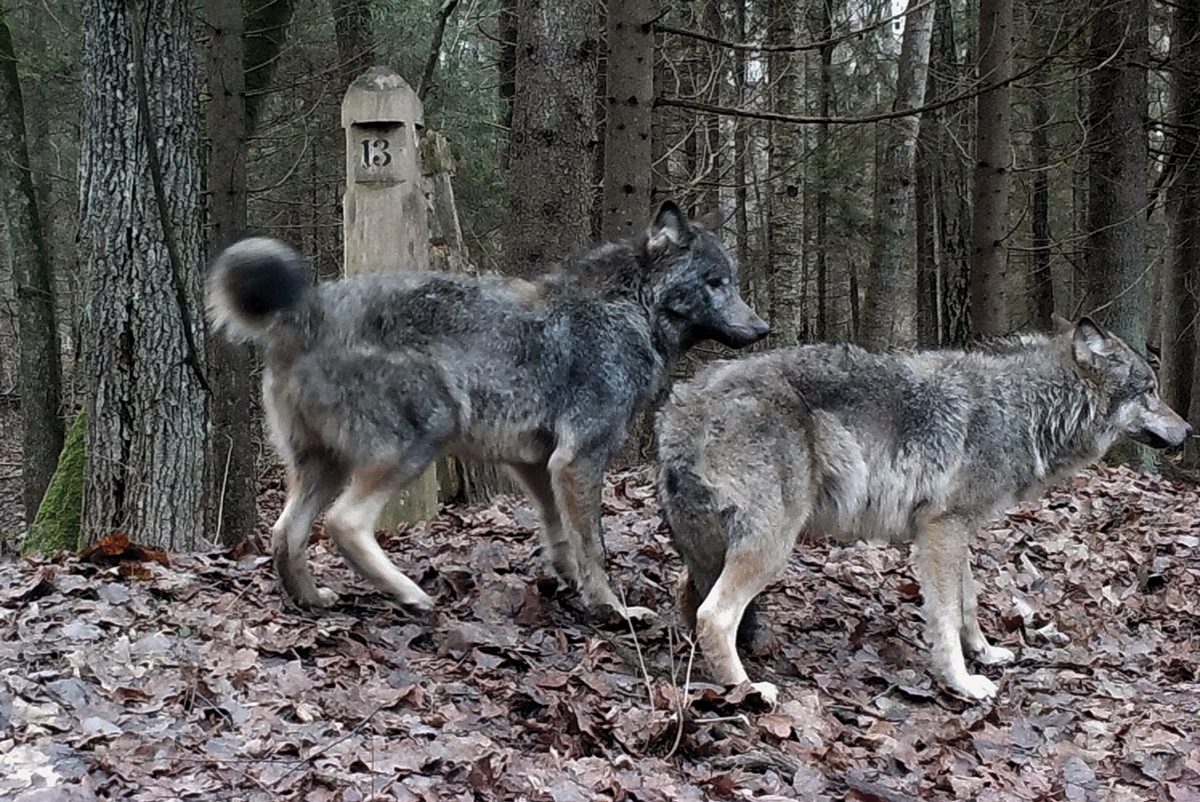
The Naliboki Forest, located in the central-western part of Belarus, is home to a dense population of wolves. Recently, brown bears have begun to populate this forested region, prompting an important question: how do these two large predators interact? Specifically, the aggressive interactions between wolves and brown bears, and the influence of their individual traits on these encounters, warrant further investigation.

Continue reading “Heavy aggressive interference between wolves and brown bears in Naliboki Forest, Belarus”

Study on wolf reproduction in Naliboki Forest in 2023: a short report

Co-author Irina Rotenko

During 2023, we continued our long-term studies on the wolf reproduction in Naliboki Forest (see Sidorovich and Rotenko, 2019 and other posts in this blog for details and more information). An outstanding feature of this year for the reproduction of wolves in Naliboki Forest was the relatively low number of lynxes (15-20 individuals). This is 4-5 times lower than that in 2016-2018. Lynx is one of the hostile species for wolf pups (Sidorovich and Rotenko, 2019; Sidorovich, 2022), and presumably killing of wolf pups by lynxes can nullify the breeding efforts of wolves. However, there are other hostile animals to wolf reproduction such as brown bear, bison, elk and red deer, sometimes wild boar and even red fox (Sidorovich and Rotenko, 2019; Sidorovich, 2022). Therefore, we still could not test the hypothesis of which of these antagonistic species plays the main role in killing of wolf pups. This year gave us a unique opportunity to examine the role of lynxes.

Continue reading “Study on wolf reproduction in Naliboki Forest in 2023: a short report”

How wolves break the idea of the species monogamy

Co-author Irina Rotenko

In our large experience and large dataset on wolf reproduction in Belarus (e.g., Sidorovich and Rotenko, 2019), there is much evidence that the widely spread idea of monogamous wolves is mainly wrong.

Continue reading “How wolves break the idea of the species monogamy”

Multi-breeding in a wolf pack. Nowadays it is commoner than breeding of a pair in Naliboki Forest

Co-author Irina Rotenko

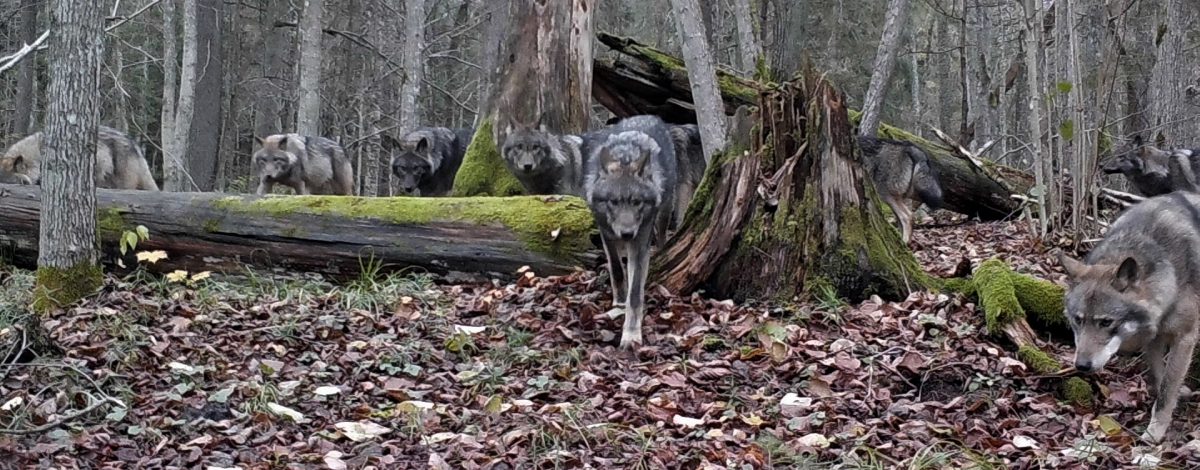
Multi-breeding in a wolf pack is one of the enigmatic questions of the grey wolf reproduction. When we began to investigate the wolf reproduction in Belarus (mainly in Naliboki Forest and Paazierre Forest) in details, we found the phenomenon of a pack multi-breeding.

Continue reading “Multi-breeding in a wolf pack. Nowadays it is commoner than breeding of a pair in Naliboki Forest”

Too early giving birth in wolves got common in Naliboki Forest

Co-author Irina Rotenko

In this post we address to a newly registered trend in breeding of wolves in Belarus, in particular relating to the earlier giving birth in wolves in Naliboki Forest, the central-western Belarus and in the whole country.

Continue reading “Too early giving birth in wolves got common in Naliboki Forest”

Double breeding in the model wolf pack during the spring of 2022 with implication for a pattern of a pack multi-breeding

Co-author Irina Rotenko

In the book on the grey wolf reproduction biology (Sidorovich & Rotenko, 2019) we told about several patterns of wolf pack multi-breeding, which we documented in Naliboki Forest and Paazierre Forest in Belarus during the last two decades. The main distinctive feature in wolf pack multi-breeding is how many big adult males, which perhaps equally ranked, take part in a breeding group of wolves. If a male leads a breeding group, normally it is only a strong male in the breeding group. Such a group of breeders may include two or three breeding females.

Continue reading “Double breeding in the model wolf pack during the spring of 2022 with implication for a pattern of a pack multi-breeding”

Video-results of the study on wolf denning in May 2021 in Naliboki Forest: again wolves denned in burrows only and no more on open couches

Co-authors: Irina Rotenko and Gerard Oonk

In the last year after our study on denning in wolves in May 2020 we have already reported about the peculiar situation in denning by wolves in Naliboki Forest, the central-western Belarus. Wolf breeders stopped denning on open coaches as it used to be, and they began denning in burrows exclusively, when mammals (red deer, bison, elk, lynx, brown bear), which are characterized by aggressive behaviour to pups, got plenty altogether in this forested terrain.

In May 2021 we discovered four active wolf dens and traced the denning behaviour of two wolf breeding groups having two and three breeding females (both cases of a multi-breeding in a wolf pack). All the five breeding female wolves kept pups in burrows only. Altogether we found 33 wolf burrow-dens that were used for denning: 7 self-made by wolves and 26 enlarged badger-setts and outliers. Interestingly, that 11 out of 26 badger burrows were wolf burrow-dens before (2-7 years ago). No any wolf couch-dens were found in May 2021, while before such a situation that is inimical for wolf denning they denned on open couches and pits.

See the video below for the details of denning in wolves in Naliboki Forest during May 2021.

Summary on the wolf triple-breeding group that we traced in 2020 and partial split in the pack by late autumn

Coauthor Irina Rotenko

In 2020 we published series of posts (1); (2); (3); (4); (5) about triple-breeding pack of wolves, which consisted of three semi-independent breeding couples. This breeding group and the whole pack was led by one of the breeding females that we call Torn Ear. She was easily recognisable on photos due to really torn right ear.  

Continue reading “Summary on the wolf triple-breeding group that we traced in 2020 and partial split in the pack by late autumn”