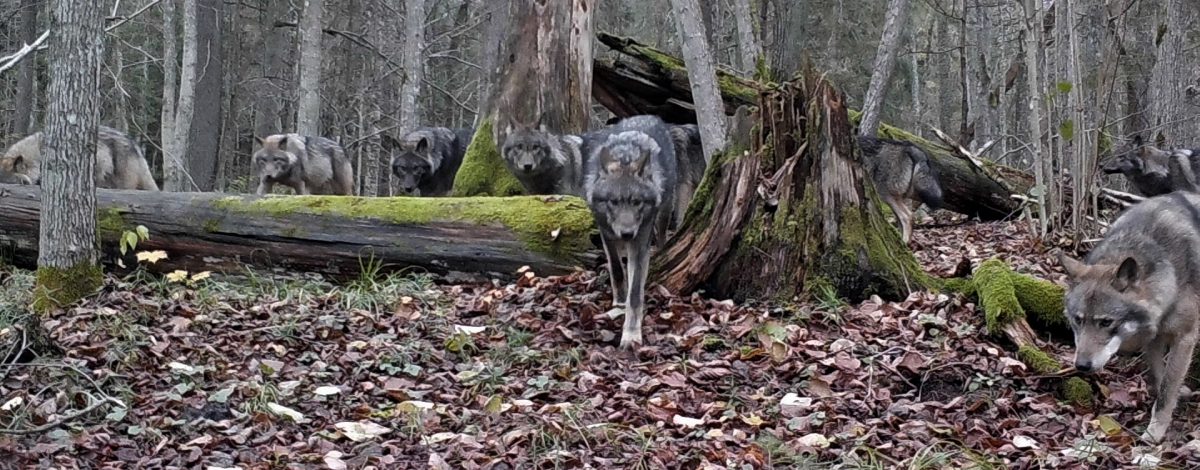

In Naliboki Forest adult lynxes particularly males are known as killers of the vulnerable categories of wolves such as pups, lonely living subadults and heavily pregnant females (Sidorovich et al., 2019). Also, lynxes may be a valuable competitor for wolves in their exploiting of the roe deer and beaver populations. Study on the interference of wolves and lynxes in Naliboki Forest suggested that wolves disagree with presence of lynxes in the habitats, and they behave aggressively towards lynxes, too. Lynxes feel safe in forest habitats, whereas they mainly avoid openings, when wolves are common in the habitats and where they may be killed by a wolf pack, because there are no trees to escape. Continue reading “Wolf erasing off marking points of lynxes”
Category: Current studies
The role and origin of open ground spots for large carnivores, wild ungulates and other wildlife

In snowless period spots with open sand, peat or other ground types are outstanding elements in the habitat structure in forested areas such as Belarus, and many mammal species tend to use them for territorial marking. Among these mammal species first of all it may be mentioned red deer, bison, wolf and lynx.
Great interest in marking by lynxes from other mammals

Co-author Irina Rotenko
Concerning territorial marking by lynxes there is intriguing question of a great interest of wolves, red foxes and deer to lynx marking points, but there is no such a reaction of lynxes and deer to marking by wolves. It is easy to realize, why red deer, roe deer and red foxes pay so much attention – lynxes kill them often. Therefore, any information about lynx distribution and status (adult or young, sex, welfare etc.) are important for these victim species. The same is for wolves. Adult lynxes not infrequently kill wolves from vulnerable categories such as pups, heavily pregnant females, just small individuals. However why there is no such a pronounced reaction on marking by wolves?
Continue reading “Great interest in marking by lynxes from other mammals”
Abandoned log piles as habitat spots that are important for lynx families
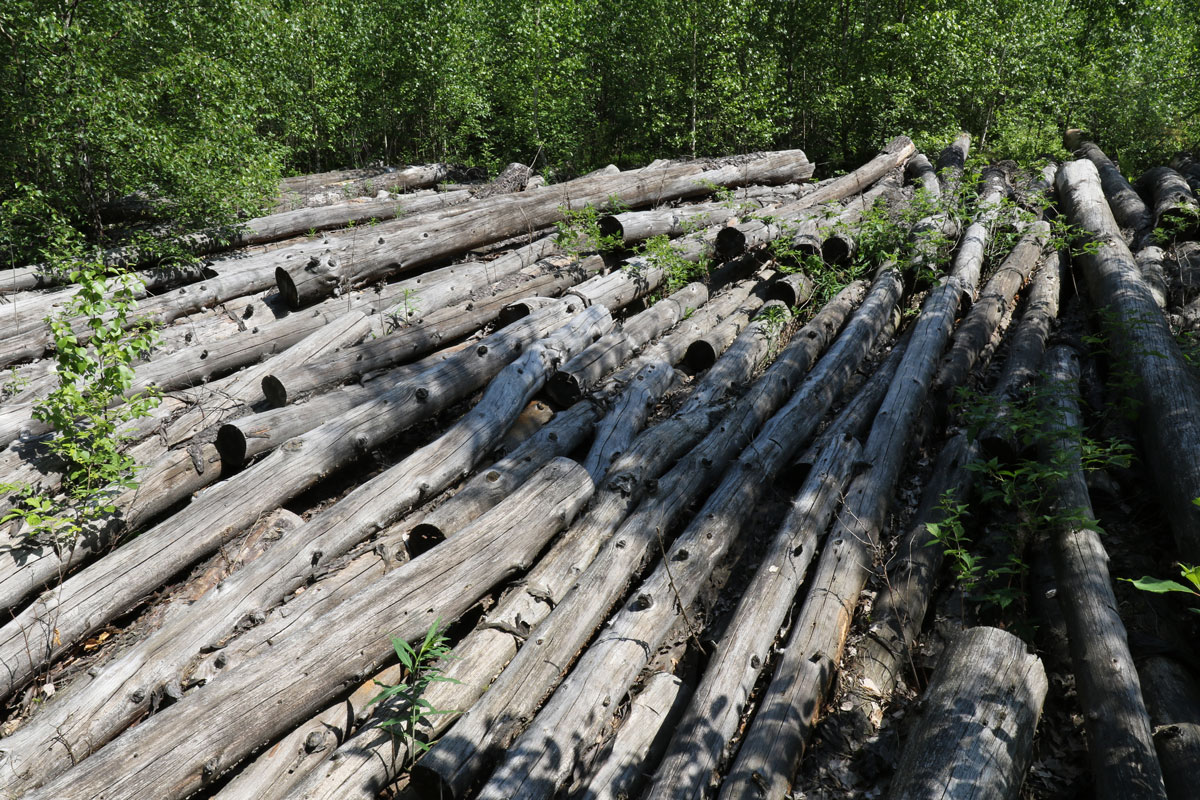
Quite often clearcuts in Naliboki Forest are full of logging remains. Moreover, sometimes loggers forget one or several piles of logs and they stay there for decades. It is always like a gift for lynxes, particularly the species families. The main benefit of lynx family is that mother may leave small kittens there, and they will be safe alone in the emptiness under the logs, when the mother goes for hunting. It is especially essential, because lynxes frequently use a long-lasting hunting from ambuscades, so, kittens need to wait for the mother quite long.
Continue reading “Abandoned log piles as habitat spots that are important for lynx families”
Dramatic situation in the beaver population in Naliboki Forest in relation to hotter and drier summers nowadays
Till the 1960s Naliboki Forest, which is situated in the north-western Belarus, was a greatly swamped terrain, where on the area about two thousands km2 swamps of various types and sizes were interspersed with dry land forests the terrain-wide. Open grassy marshes constituted about 19% of the terrain. Approximately a third part of the forest habitats that covered about 76% of the area were swamped too (Sidorovich, 2016). Such a swamped forest was either in kinds of black alder and downy birch mixture (with prevalence of one of the species) or that was raised bogs with suppressed or normal pines. Continue reading “Dramatic situation in the beaver population in Naliboki Forest in relation to hotter and drier summers nowadays”
Pilot book about the Eurasian lynx ecology and behaviour has been published

Survival of the ten pups in that large wolf family in Naliboki Forest: an intermediate report
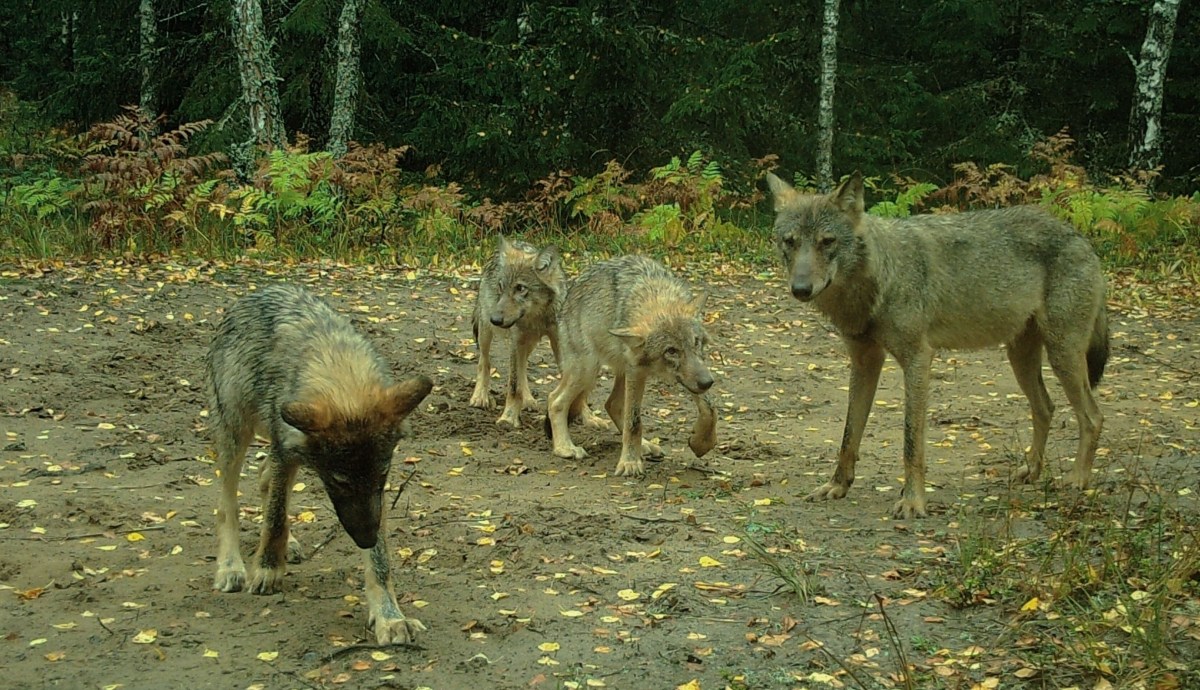
In one of the previous posts I reported about presence of the large family of wolves in Naliboki Forest that in the last July (i.e. July of 2018) consisted of founding male, two breeding females, two litters with ten pups altogether and two pup-sitters, which were almost all the time with the pups. Presence of these pup-sitters was connected with the extra care of parents to save pups from lynx attacks. The last years in Naliboki Forest in the conditions of the high number of lynxes (3-5 inds per 100 km2) wolf pup survival was very low; e.g. only about 4% of the wolf pups that were born in the spring of 2017 survived till the winter of 2017-2018. The occasions that wolf pups were killed by lynxes were numerically registered in Naliboki Forest earlier. Continue reading “Survival of the ten pups in that large wolf family in Naliboki Forest: an intermediate report”
Story of the brown bear in Naliboki Forest and the peculiarity of the on-going recolonizing of the terrain by the species
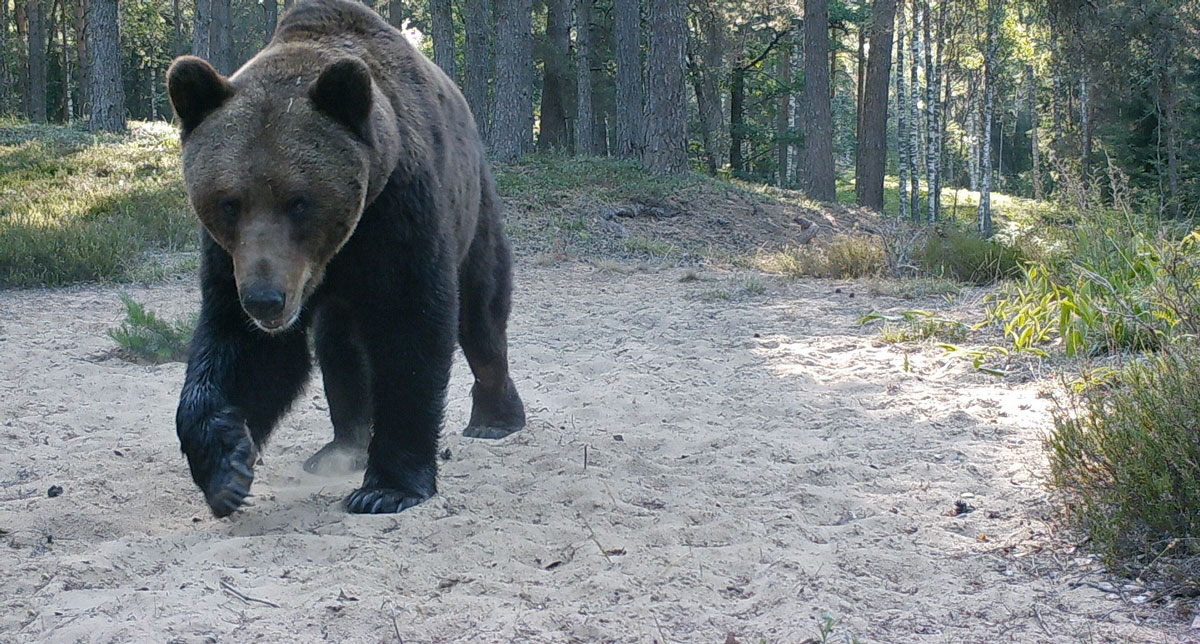
This post is not just about the story of brown bears in Naliboki Forest, but mainly about the registered peculiarity of the on-going recolonizing of this terrain by the species. At the same time, the whole story of brown bears in Naliboki Forest (as far as it is available to learn) is interesting too and will add extra information for better realizing of the current situation. Continue reading “Story of the brown bear in Naliboki Forest and the peculiarity of the on-going recolonizing of the terrain by the species”
Two wolf litters, two breeding females, founding male and two pup-sitters on a camera-trap in Naliboki Forest
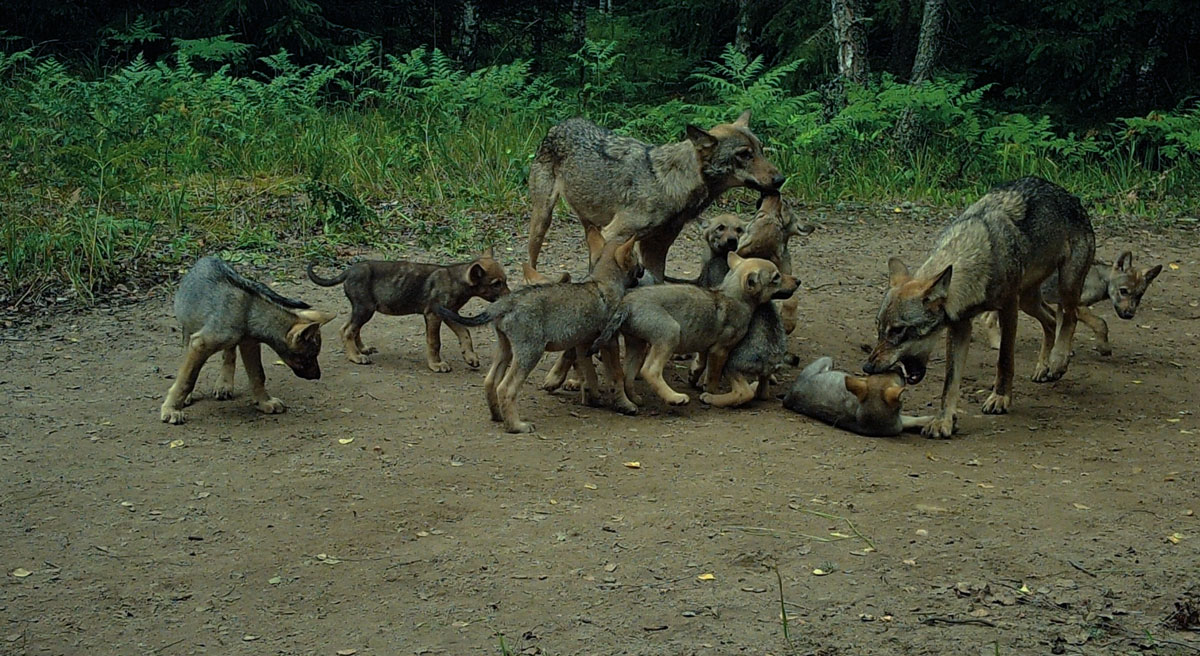
This post gives the documentation by a camera-trap of two different litters (10 pups altogether), two breeding females of the same wolf pack, the founding male and two pup-sitters in Naliboki Forest. The last feature is particularly essential. One or two pup-sitters were present at pups on about 60% of the hundreds of photos taken. It looks like we have registered the features of another trend in the wolf denning behavior that we haven’t faced with before the lynx got common. That is when breeding wolves use pup-sitters to save their pups from the lynx aggression (see another post for other details), when they go for hunting.
Why do lynxes visit road pipes?

In Belarus lynxes quite often visit road pipes. In the warm season, they mainly use road pipes without running water. In winter, when water is covered with ice, almost all pipes that are large enough are in lynx usage.
 Zoology by Vadim Sidorovich