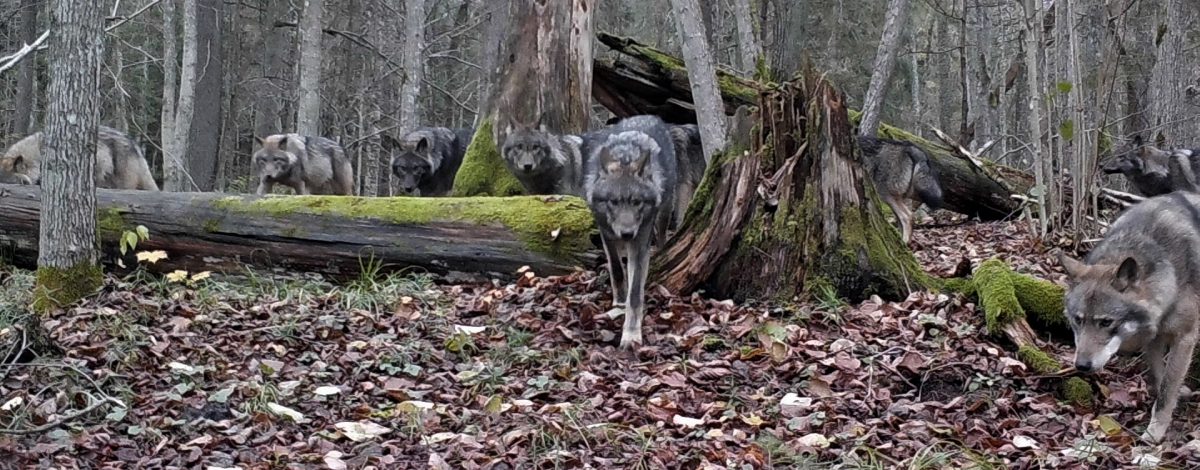
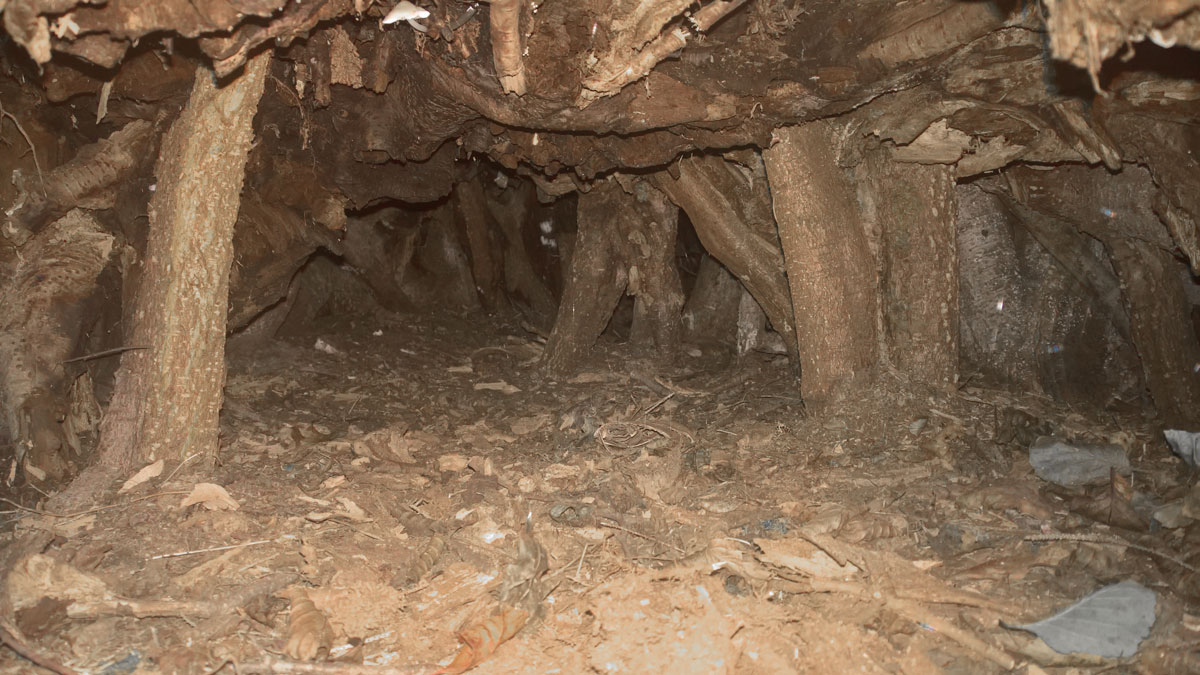
Recently, another former lynx den was discovered, which was active in the months of June and July.
Continue reading “One more case of lynx denning”Tag: breeding
Accommodating a yearling male lynx in the original den where it was reared
Co-author Irina Rotenko
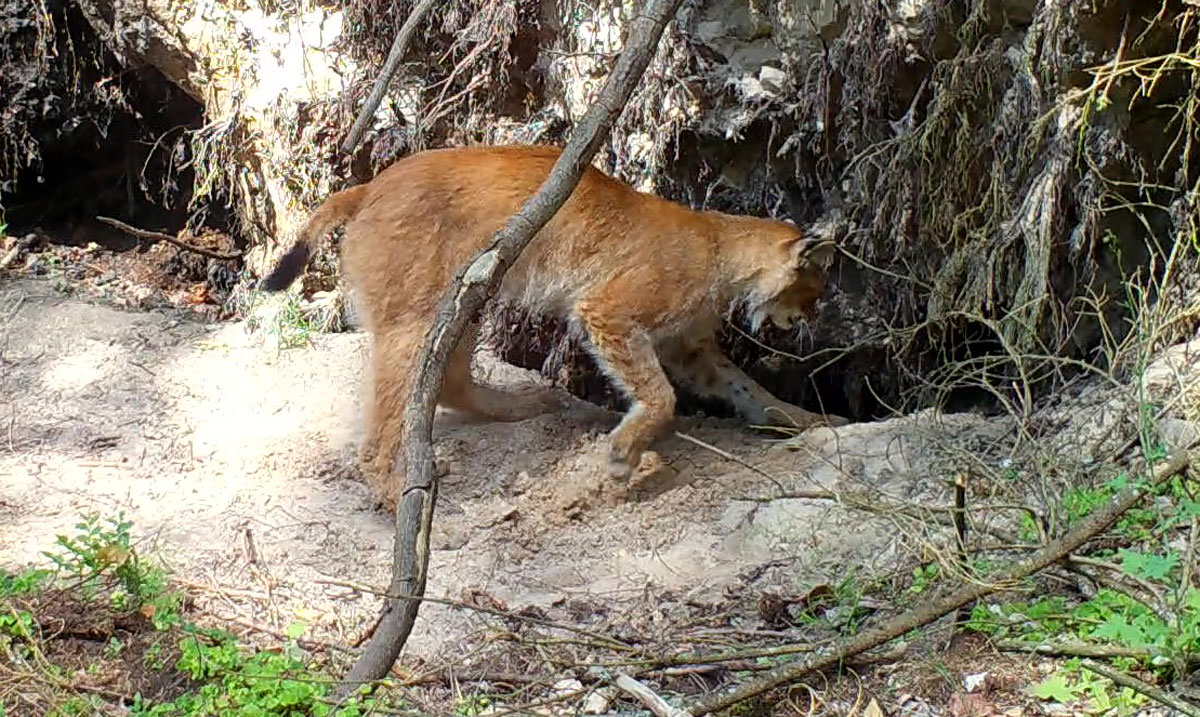
At the start of June, we discovered wolf pup tracks alongside numerous lynx footprints nestled between the root plates of two toppled spruces. We installed a camera trap at this location. Following our visit, the wolf pack seemed to have moved elsewhere. The camera trap documented numerically repeated visits by a yearling male lynx.
Continue reading “Accommodating a yearling male lynx in the original den where it was reared”Tracking the denning behavior of a model female lynx during the summer of 2024
Co-author Irina Rotenko
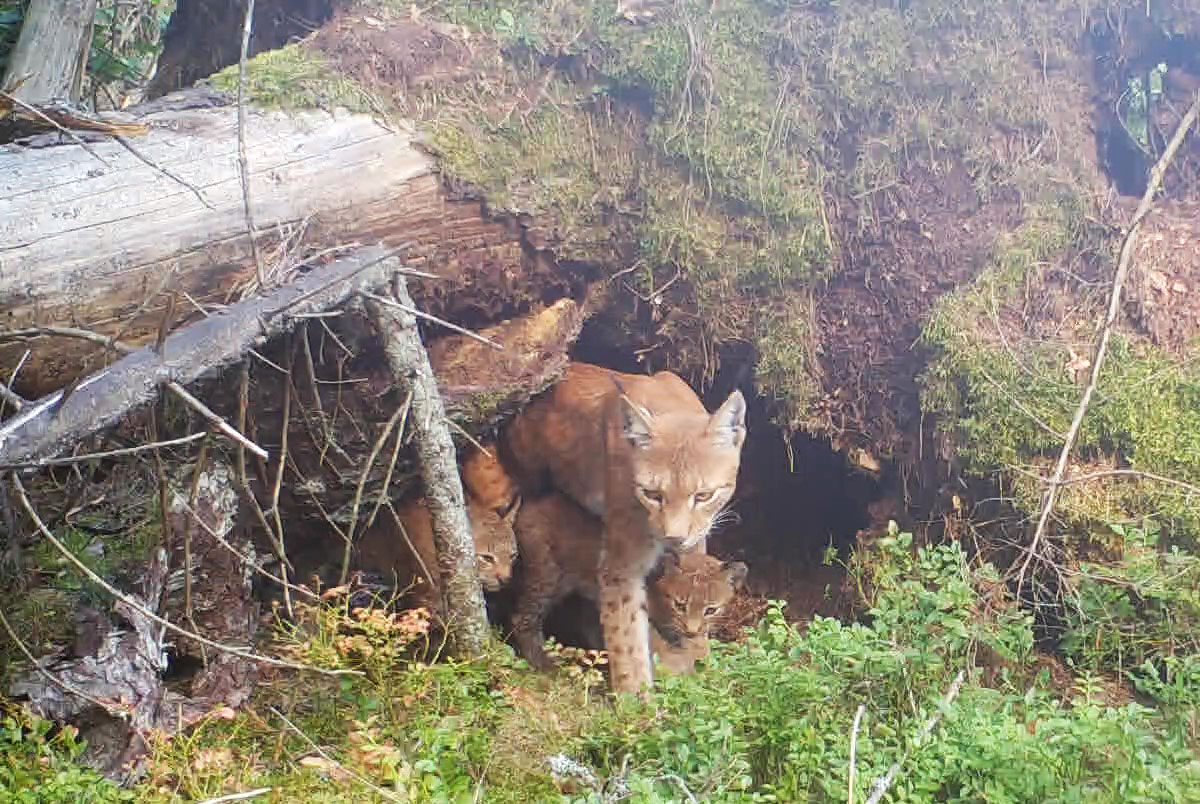
In mid-May 2023, an adult female lynx, whom we refer to as Mikhalina, gave birth within a densely layered treefall spanning approximately three hectares. She had three kittens. The following two photos depict the treefall.
Continue reading “Tracking the denning behavior of a model female lynx during the summer of 2024”The Reproductive Struggle of Brown Bears in Naliboki Forest: An Investigative Hypothesis
Co-author Irina Rotenko
Historical Context and Current State of Brown Bears
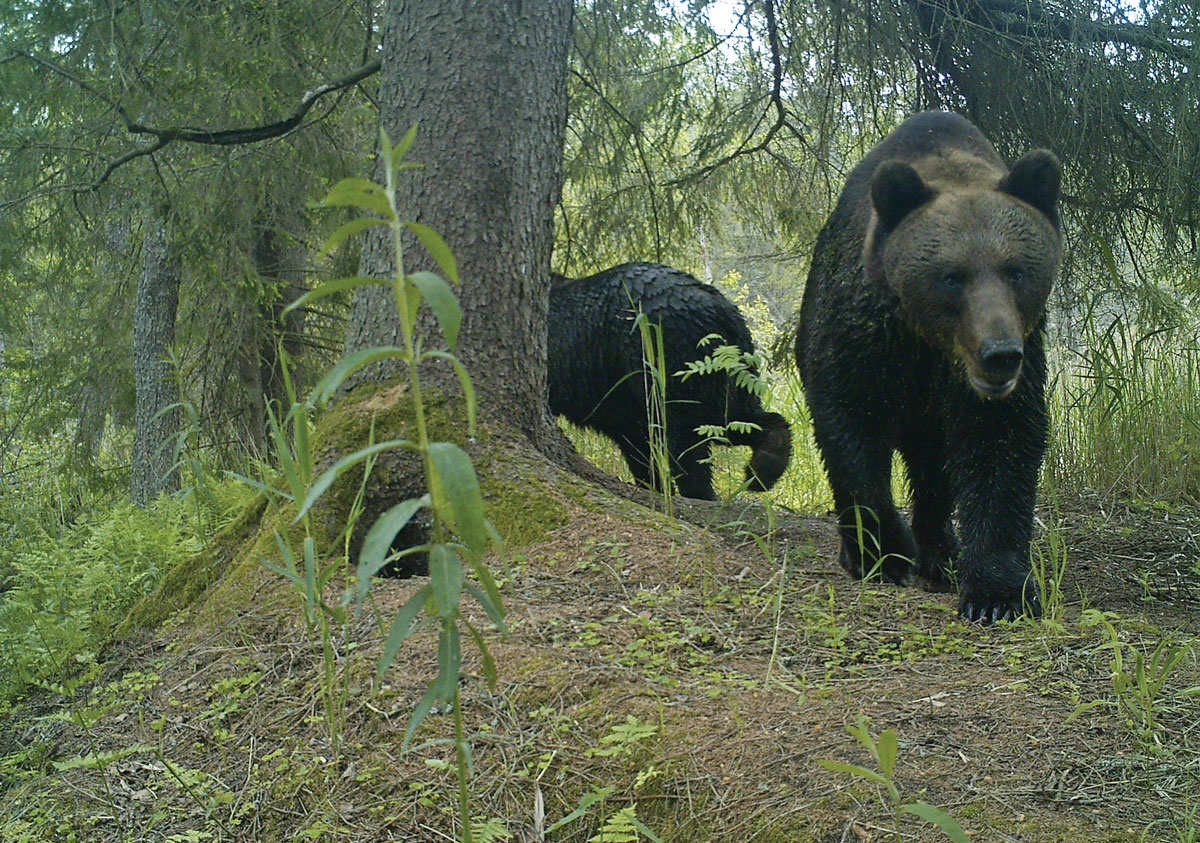
During the Great Lithuanian period, from the 16th to the 18th centuries, brown bears were abundant in the Naliboki Forest and surrounding forest massifs. Reports of hunting these animals frequently appear in the game husbandry documents of the Radziwills and other magnates. Up until the First World War, the brown bear remained a standard game species and a relatively common trophy in the hunting collections of the local elite, indicating a high-density population in the Naliboki Forest.
Continue reading “The Reproductive Struggle of Brown Bears in Naliboki Forest: An Investigative Hypothesis”Results of wolf denning study in Naliboki Forest (April-May 2024)
Co-authors Irina Rotenko and Viktar Kasilovich
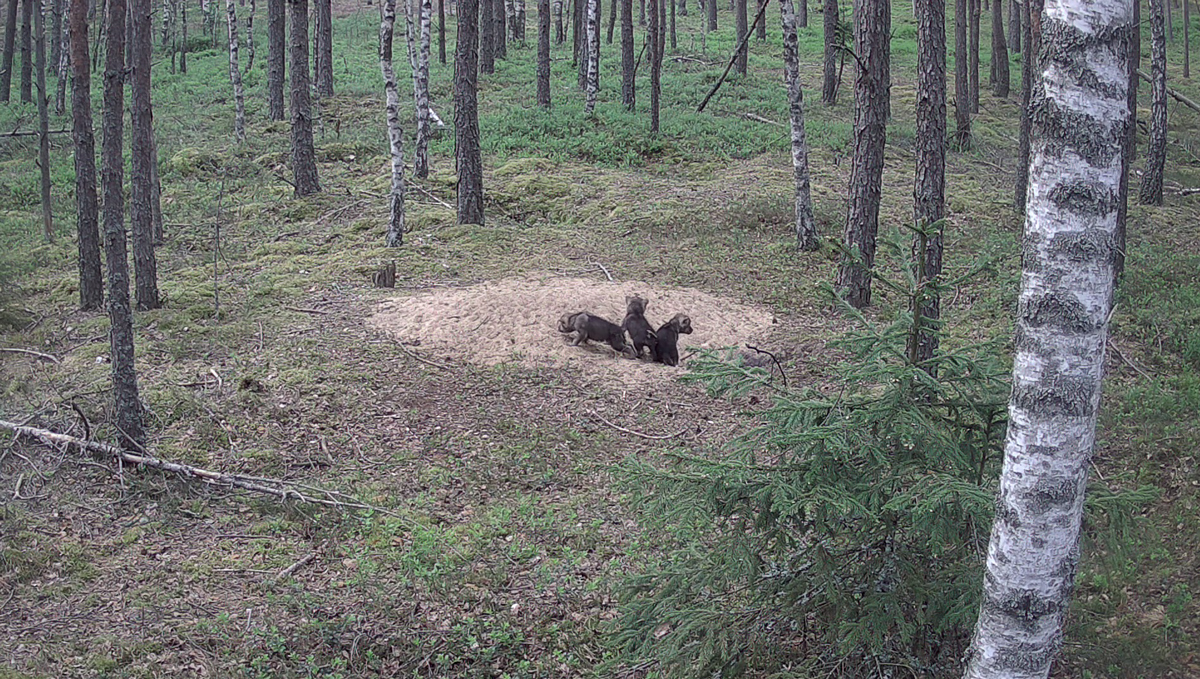
During the 2024 wolf denning season in Naliboki Forest, we initiated our study in early April and, as of early June, continue to employ camera traps to monitor three wolf families with pups. Our previous research (Sidorovich and Rotenko, 2019, along with several blog posts) indicated that lynxes, brown bears, and bison exhibit aggressive behavior towards wolf breeding. Additionally, red deer and elks have been known to attack wolf dens housing pups and those with roaming young pups. Regarding the aforementioned wild mammals previously identified as antagonistic to wolf breeding in Naliboki Forest, we have observed changes in their numbers and distribution compared to previous years.
Continue reading “Results of wolf denning study in Naliboki Forest (April-May 2024)”Heavy aggressive interference between wolves and brown bears in Naliboki Forest, Belarus
Coauthor Irina Rotenko
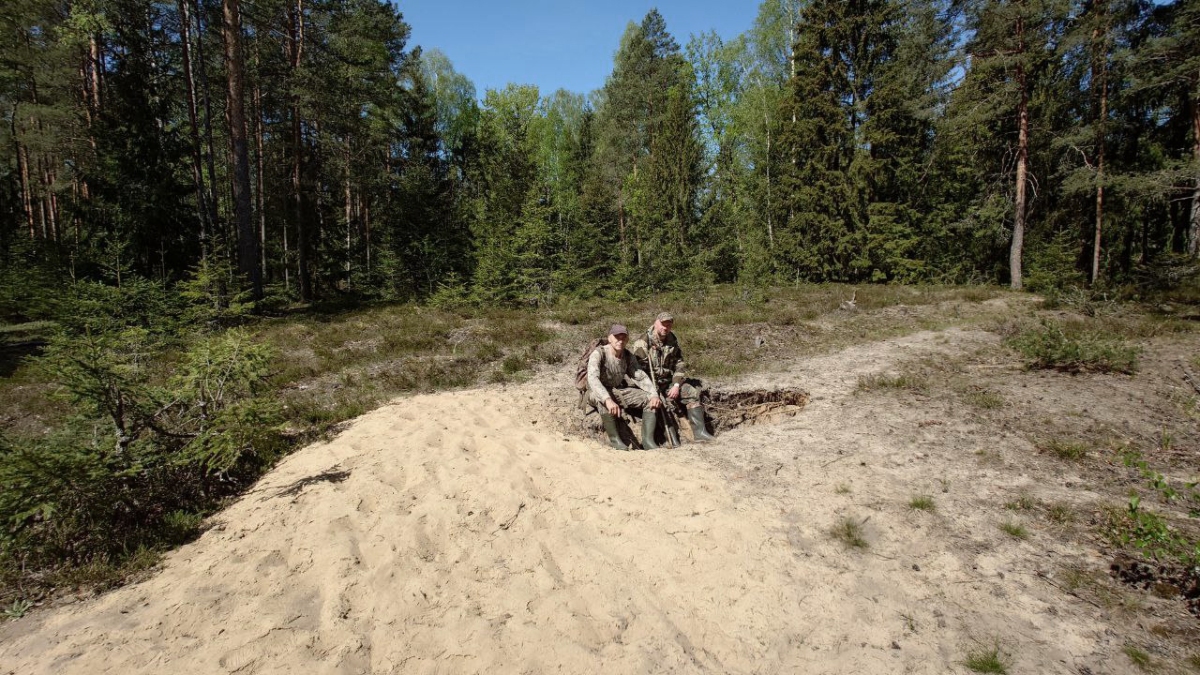
The Naliboki Forest, located in the central-western part of Belarus, is home to a dense population of wolves. Recently, brown bears have begun to populate this forested region, prompting an important question: how do these two large predators interact? Specifically, the aggressive interactions between wolves and brown bears, and the influence of their individual traits on these encounters, warrant further investigation.
Continue reading “Heavy aggressive interference between wolves and brown bears in Naliboki Forest, Belarus”How wolves break the idea of the species monogamy
Co-author Irina Rotenko
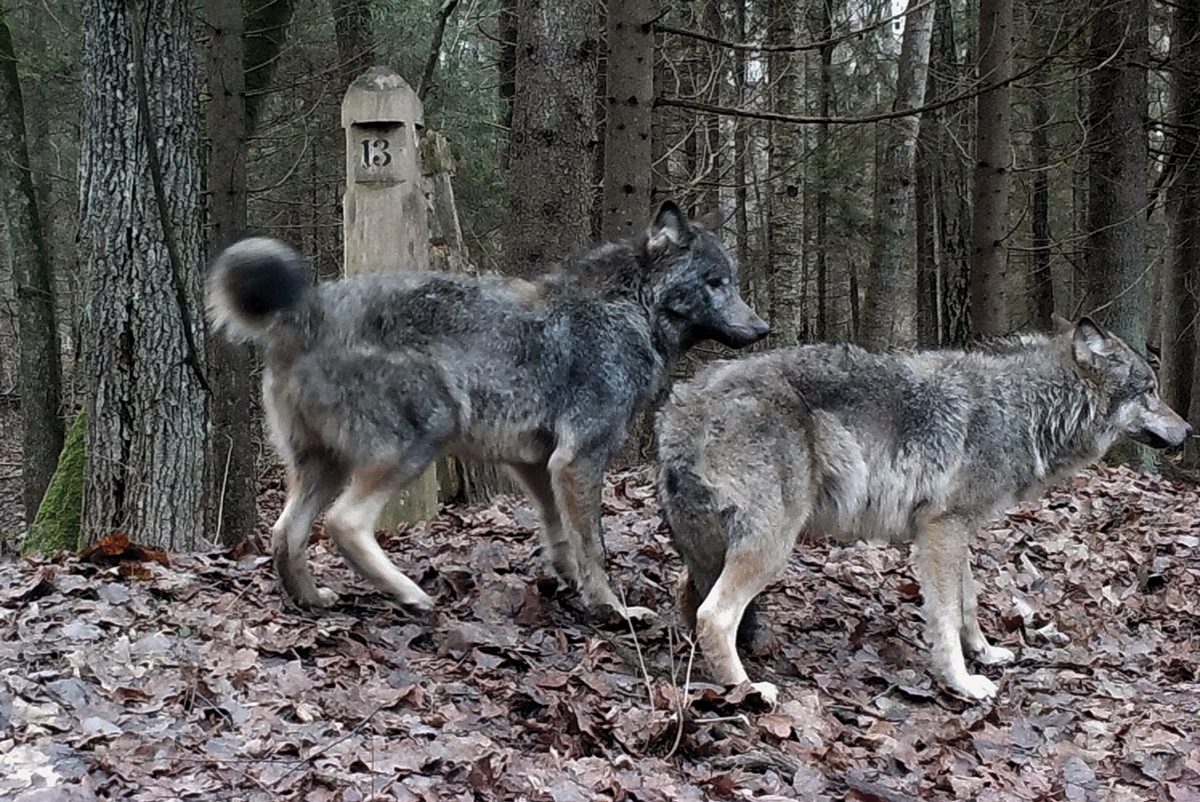
In our large experience and large dataset on wolf reproduction in Belarus (e.g., Sidorovich and Rotenko, 2019), there is much evidence that the widely spread idea of monogamous wolves is mainly wrong.
Continue reading “How wolves break the idea of the species monogamy”Multi-breeding in a wolf pack. Nowadays it is commoner than breeding of a pair in Naliboki Forest

Co-author Irina Rotenko
Multi-breeding in a wolf pack is one of the enigmatic questions of the grey wolf reproduction. When we began to investigate the wolf reproduction in Belarus (mainly in Naliboki Forest and Paazierre Forest) in details, we found the phenomenon of a pack multi-breeding.
Continue reading “Multi-breeding in a wolf pack. Nowadays it is commoner than breeding of a pair in Naliboki Forest”Too early giving birth in wolves got common in Naliboki Forest

Co-author Irina Rotenko
In this post we address to a newly registered trend in breeding of wolves in Belarus, in particular relating to the earlier giving birth in wolves in Naliboki Forest, the central-western Belarus and in the whole country.
Continue reading “Too early giving birth in wolves got common in Naliboki Forest”Double breeding in the model wolf pack during the spring of 2022 with implication for a pattern of a pack multi-breeding

Co-author Irina Rotenko
In the book on the grey wolf reproduction biology (Sidorovich & Rotenko, 2019) we told about several patterns of wolf pack multi-breeding, which we documented in Naliboki Forest and Paazierre Forest in Belarus during the last two decades. The main distinctive feature in wolf pack multi-breeding is how many big adult males, which perhaps equally ranked, take part in a breeding group of wolves. If a male leads a breeding group, normally it is only a strong male in the breeding group. Such a group of breeders may include two or three breeding females.
Continue reading “Double breeding in the model wolf pack during the spring of 2022 with implication for a pattern of a pack multi-breeding” Zoology by Vadim Sidorovich